Written by Paul J Bucknell on October, 27, 2025
James 5:13-18 Pray, Pray, Pray
13 “Is anyone among you suffering? Let him pray. Is anyone cheerful? Let him sing praises. 14 Is anyone among you sick? Let him call for the elders of the church, and let them pray over him, anointing him with oil in the name of the Lord; 15 and the prayer offered in faith will restore the one who is sick, and the Lord will raise him up, and if he has committed sins, they will be forgiven him. 16 Therefore, confess your sins to one another, and pray for one another, so that you may be healed. The effective prayer of a righteous man can accomplish much. 17 Elijah was a man with a nature like ours, and he prayed earnestly that it might not rain; and it did not rain on the earth for three years and six months. 18 And he prayed again, and the sky poured rain, and the earth produced its fruit.
One of the most noticeable things when reading James 5:13-18 is the frequent repetition of the word ‘pray’ or 'prayer.’ There are two immediate thoughts: (1) prayer is essential to the normal Christian life, and (2) Christians need prayer! They often encounter situations that require prayer. Unlike the secular world's suggestions about us, prayer plays an important role in our Christian lives. We want to focus on the more basic questions Christians have about prayer:
- What is prayer?
- Why does God want us to pray so much?
- Why don’t Christians pray much?
- Why doesn’t God just heal or relieve the suffering?
- Doesn’t the Lord want us to be better off?
Our focus today is not on studying the detailed advice but rather on the fundamental importance of prayer in Christian belief and outreach. The different forms of the word ‘pray’ are used seven times across six verses! When we think about the role prayer plays in our lives, we are amazed. Consider the prayer happening in the early church.
Although the word "prayer" is used seven times in English, we should remember that there are many Greek words for prayer. In this case, we have three: proseuch, euch, dehsiv. They have subtle differences, but they are general words for prayer. There are also other words in this passage that represent types of prayer, such as ‘confess’—think of confessional prayer—or ‘sing praises’.
The pastor realizes that the congregation is made up of many needy sheep. The new believer has a lot to learn here. Troubled marriages, parent-child conflict, struggling relationships, personal emotional problems, and more make up the list. Saved people face many tough situations. The good thing is that we can look to Him for resolution.
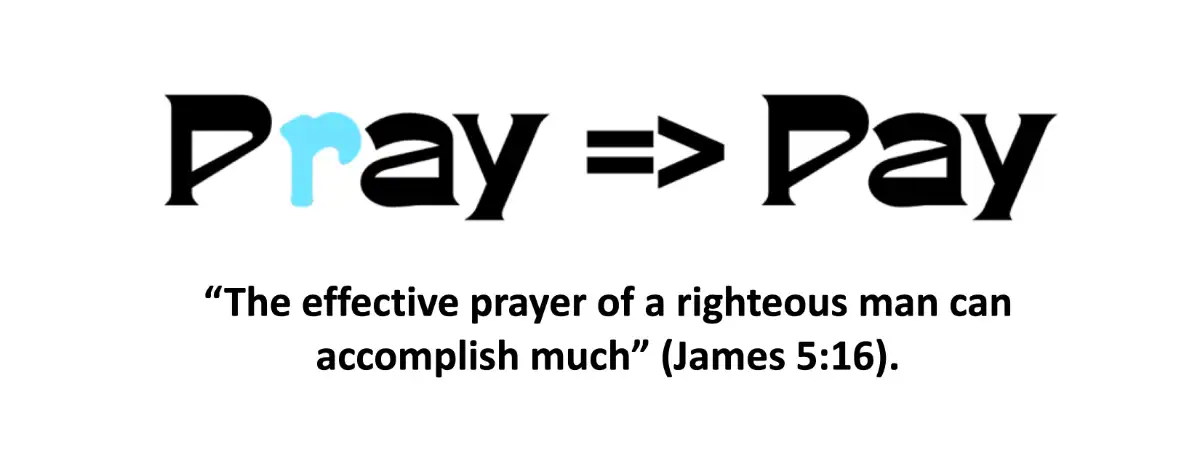
Prayer isn’t just for times of extreme stress when we need a breakthrough; it’s for always. James gives us plenty of advice, and all of it focuses on prayer. We can sum it up by saying, “Positive change comes when God’s people pray!” Do you believe this? Do you pray? One reason to get us praying is pain. In other words, you and I don’t pray enough. We have to face terrible situations before we cry out to God. This happens on a personal level as well as on a national one, which we are now experiencing.
Before proceeding, pause and consider the role prayer has in your life. Remember that, like your feet when walking or your mouth when talking, prayer forms the foundation of your communication with the Lord. We gain a clear picture of our relationship with God by assessing the regularity and intensity of our prayers throughout the day. A better comparison might be seen through the texting used in today’s communication with others. However, take away prayer, and man no longer communes with God. Prayer, therefore, acknowledges our humble yet privileged way of speaking with God. James provides four scenes of prayer in these verses.
Scene 1: The suffering and troubled (Ja 5:13)
Scene 2: The sick and wounded (Ja 5:14-15a)
Scene 3: The shameful and guilty (Ja 5:15b-16)
Scene 4: The effective and powerful (Ja 5:16-18)
What a shame that many of us do not regularly use the weapon of prayer. It is like a little boy with nothing to do who has a full toy box of toys that he doesn’t realize is there. Or like the pilot who doesn’t know where the button is to start the engines. Is it possible that the church is wobbling because it is not praying? Is the protective force weakened because believers do not pray as they could? We have raised many questions and now will answer some of them by a closer look at the scripture.
Scene #1: The suffering and troubled soul (Ja 5:13)
“Is anyone among you suffering? Let him pray.”
This is all James says about the suffering individual–“Let him pray.” We see people suffering everywhere–in hospitals, on street corners, walking through malls, and so on. Sometimes we know people are suffering; other times, no one knows. The word for suffering covers many different conditions. For the anxious, worried, sleepless, restless, and those with stomach aches, the same remedy is offered–prayer.
Is it that simple? What happens when people pray? What should we expect? James will expand on this advice, so we will begin with the most basic observations.
- We won't find any relief unless we pray.
- All sorts of comfort, strength, protection, and relief come when we do pray.
- There is no substitute for prayer. James does not say to shake, cry, or hope, but simply to pray.
James does not specify what type of prayer to use. He doesn’t need to. The kind of prayer matches the type of need and suffering one faces. Here are five examples.
Loneliness: pray for purpose and companionship. Pay close attention when you pray, as that's when God is most likely to reach your mind. God probably offers lots of advice, but we are too troubled to notice.
Lack of a job: pray for God to provide for your needs, most often in the form of employment, but not always. Remember, God might have other reasons for unemployment, such as correction for laziness or to focus your attention on His plans for you.
Worry: pray (cf Ph 4:13).
Pain: pray for relief.
Confusion: pray for clarity.
It is essential that the person suffering pray. Of course, others can pray, but the advice here is that the one suffering pray. My own advice is that when our minds are too busy or troubled, write down your prayers or speak aloud. Do not internalize your prayers when your perspective is unclear, as you will likely face temptation and distraction from the evil one, which can hinder effective prayer.
Is anyone cheerful? Let him sing praises.
James does not use the word pray here, but he could, as prayer is the general communication of the soul to God. Praise is prayer; it is the expression of our admiration and honor to God.
Scene #2: The sick and wounded (Jam 5:14)
“Is anyone among you sick? Let him call for the elders of the church, and let them pray over him, anointing him with oil in the name of the Lord; 15 and the prayer offered in faith will restore the one who is sick.”
Once a person becomes sick, he is not told to pray for himself, as in the case of the one suffering. Instead, he is to seek others to pray for him. The entire situation is different. One might wonder whether the purpose of suffering is to awaken one’s dependence on God, while in this case, bodily distress becomes a community matter. We are not saying that one should not pray for those who suffer, but recognize that serious sickness and disease are in a different category. Perhaps it is because they can no longer go where God’s people are and need to bring the ‘church’ to them for prayer. Communication and travel are so common today–we have wheelchairs and can text each other. But it was not this way in the past. “For where two or three have gathered together in My name, there I am in their midst” (Mat 18:20).
Still, prayer remains a type of resolution. Why? Because prayer is the method God has chosen to bring relief into our lives. As much as we dislike suffering and pain, we should still take great joy in our Lord, who has provided us a way to find help in Him. Our conclusion is that this reliance on God, and even communicating with Him, is more important than the presence of suffering and pain. This is the message of Jesus. Go to Him, you who are weary and heavy laden (Matt 11:28). We should come to love this dependence on the Lord and recognize that the difficulties of the world are tools to awaken our sleeping souls. We can so easily go through life without turning to the Lord, but our greatest need and joy come from knowing Him.
The Lord is not ignoring our needs but provides special provision through the prayers of His people. God has ordained prayer as the way for the sick to find relief. James clearly describes this process. He is likely recalling a recent time when God brought healing to someone in the congregation.
Discovery of sickness. The Greek word for sickness is asthenia, which broadly means weakness or illness. The severity of the sickness matters. It’s assumed that the sickness is disabling, making it impossible for the person to attend church, so they seek for the church to come to them. Colds and fevers are usually milder and do not require anointing.
Let him call for the elders of the church. Elders are the spiritual overseers of a congregation, generally those who live righteous lives and have faith in God over the years. This does not prevent others from different congregations or those not serving as elders from praying, but it is under the supervision of the elders. It is a special privilege for the elders to care for those with illnesses.
“Let them pray over him” (5:14).
Prayer is the solution. There is power in prayer. Well, yes and no. Yes, because prayer is the means the Lord has ordained to bring healing and relief; but no, because it is not the prayer itself—like the words are magic–but the Lord behind the prayer that matters. We should never forget the power behind prayer. Prayer only unlocks the Lord’s power.
Does this mean that the Lord limits Himself to the prayer of the saints? This is an interesting theological topic, but not James’ concern here. However, it is important to recognize—since our faith is built on this—that God willingly and sovereignly involves Himself in our affairs. The Lord gives man the opportunity to cry out to Him. Isn’t it true that the Israelites in Judges only cried out when they were distressed? We are wrong to criticize the Lord for allowing such distress, because it serves as a chastisement to draw them and us back to truth, repentance, and His principles.
“Anointing him with oil in the name of the Lord” (4:14).
The word ‘anoint’ simply means to rub. While America has largely replaced such forms of healing with taking pills, it is still quite common in some parts of the world. James, the brother of Jesus, was familiar with oil. I personally learned this when I was in India. A special mixture of oil and herbs rubbed into the scalp (in this case) is aimed at bringing healing. When my friend was experiencing severe vomiting and diarrhea, they used a special oil, rubbed it on his head, and prayed. The Lord healed him. Within twelve hours, he felt better. My understanding is that the oil is not just symbolic but the most effective medicine available. We should use what we have, apply it, and then pray. For some, they take a small drop of oil and touch their forehead. This is not the full meaning, but we should recognize that since they probably have taken medicine or an alternative form of oil, we don’t trust the oil alone but the faith (verse 15) along with the best healer.
“The prayer offered in faith will restore the one who is sick” (4:15).
Man is limited. Man is not meant to operate solely within the material world. Why would anyone think that man would find the greatest relief without God? The problem is that man only looks to what God has provided in this world and has separated God from their life.
Why is faith necessary? Faith makes prayers effective because one must come to God, believing in His existence, ability, and desire to help, for Him to recognize your prayers (Heb 11:6). A mechanical prayer, a magical prayer, a religious prayer, and a ‘hope you get well" prayer are all quite inadequate. God is not involved until we personally depend on Him, and faith is necessary for that. Man is humbled by his great need for God as well as God’s merciful work in our lives.
Scene #3: The Guilty and Shameful (Jam 5:15-16)
15 And the prayer offered in faith will restore the one who is sick, and the Lord will raise him up, and if he has committed sins, they will be forgiven him. 16 Therefore, confess your sins to one another, and pray for one another, so that you may be healed.
Closely related to the previous point is the forgiveness of sin. It is not presented as a separate point, but we mention it here to emphasize the importance of prayer.
Confession of sins to others is part of confession when our sins have affected others, such as when we have a divisive spirit. We should confess to God that we have failed Him and others. After compromising our standards before God, we also need to confess these wrongs to others. Confessing to God is a form of prayer because it involves conversing with Him. Yes, we have hurt others, but this always becomes sin that we must also confess to God. The next phrase of verse 16, “The effective prayer of a righteous man…” actually belongs to the following verse.
Summary: We see that trouble is a great motivator for prayer. Unfortunately, we often focus on prayer for our own lives or even those connected to us. The elders are already trained to pray for others. God wants all His people to be powerful intercessors, praying for others including those we do not know (1 Pe 2:9-10). God desires us to move from only praying for personal needs to praying for group needs (such as small groups, families, churches) and eventually for those who are distant from us. Where are you on this diagram regarding your prayer life?
Scene #4: The Effective and Powerful
The effective prayer of a righteous man can accomplish much. 17 Elijah was a man with a nature like ours, and he prayed earnestly that it might not rain; and it did not rain on the earth for three years and six months. 18 And he prayed again, and the sky poured rain, and the earth produced its fruit.
Does this last section serve as a summary? Maybe, but only partially. James clearly hints that we are all supposed to rise to become people who offer ‘effective prayer’ and live righteous lives. We need to build this solid foundation for our lives to produce those effective prayers. Prayer makes a huge impact in this world. We need to ask why and how.
We mentioned earlier that God ordains prayer as the way He releases His powerful grace and love. This doesn’t mean that He doesn’t also show love and grace in other ways, but rather that in many situations He works through His people to accomplish this. I believe prayer is, as we’ve said, a way to strengthen our faith and reliance on God, but it is also the means by which God shares the blessing of His work with us. Consider the implications of this. When we complain that God isn’t doing something, isn’t that a reflection of our own unwillingness to pray or a lack of faith? If God has said that it can be done through our prayers, then why do we dare blame God? Let’s have faith and pray! There is no limit to what we can do, and that is emphasized in many scriptures (1 Jo 5:14-16).
Jesus and John both said, “Ask what you wish, …”. The sky is the limit. There is no limit. God doesn't hinder us from praying–like your limit on calls or texts—but encourages us to pray more! This is amazing. Two questions come to our minds.
(1) Is James referring to someone who is declared righteous by Christ or someone who lives uprightly? This is clear, not only from the context of the Book of James, which emphasizes the need for righteous living, but also from its implication. Unrighteous individuals will face many oppositions from Satan and their own desires, making it difficult for them to focus on other matters. They lack faith. Even if they think of a need, they do not have faith for it unless they repent and return to the right path.
(2) The righteous saints, however, are righteous because they have receptively prioritized God’s kingdom. They have established their trust in God by faith. In different areas, they have gained a little faith and can therefore believe God for what needs to be done. Their thoughts are often constrained by their lusts, making it hard for them to hear and follow the whisper of God’s Spirit. The Lord leaves this entire area of our prayers open. May we take hold of the power of prayer and put it into action.
I personally need to restrict my criticism of the growing problems in our society, the church's ineffectiveness, and the lack of love in God's church. Why? Because criticism won't help. It undermines our faith and focus. If we acknowledge the problems, then let us instead come to our Lord in prayer, trusting in Him! Take action against the immorality in our society by interceding for the world and the lost. James says we often lack wisdom simply because we do not ask (Jam 1:5-6). We might criticize the Old Testament saints for what they could have done better, but isn’t it our opportunity today? Either you will fall, or you will stand and pray.
The summary of the principles is highlighted by insightful observations on Elijah’s life. Let’s share some observations.
The effective prayer of a righteous man can accomplish much. 17 Elijah was a man with a nature like ours, and he prayed earnestly that it might not rain; and it did not rain on the earth for three years and six months. 18 And he prayed again, and the sky poured rain, and the earth produced its fruit.
Same nature. We all share the same nature. It is completely wrong to lift Elijah up or dismiss the potential in us by focusing on our weaknesses.
“Prayed earnestly.” Elijah was persistent in his prayers. He was engaged in them and wanted to see a change.
"It did not rain.” Answers to prayers do happen. I have heard many cases where people keep a journal of requests and timed answers, and they can easily see how God responds one after another. Have you seen this? It’s a great way to build your confidence in how God works through prayer.
Summary
Prayer is always the answer for what we or the world need—persistent, believing prayer. Are you a man or woman of prayer? Why not? What holds you back? Do you need to be struck with HIV, divorce, failure, or spiritual drag? Cast away your unbelief now and start heartily praying for every area of your life as well as for others. Break through your selfish preoccupation with your own needs.
Our area can be dramatically transformed if we simply pray. Nothing holds us back except ourselves! We know God’s will is to save and make disciples. If the peak of our day is reaching another level of ease and leisure, then truly, God will, in His kind mercy, break us so we can wake up to the real world we live in.
10 Finally, be strong in the Lord, and in the strength of His might. 11 Put on the full armor of God, that you may be able to stand firm against the schemes of the devil. 12 For our struggle is not against flesh and blood, but against the rulers, against the powers, against the world forces of this darkness, against the spiritual forces of wickedness in the heavenly places. 13 Therefore, take up the full armor of God, that you may be able to resist in the evil day, and having done everything, to stand firm” (Eph 6:10-13).

Bible Study Questions
James 5:13-20
* An asterisk means that one will not find the answer in the Bible text but is to come up with an answer from one's experience.
- Kickoff question: What does your church believe about healing? What healing experiences have you or someone you know had?
- Look at James 5:12-14. What are the three kinds of people listed here that one might find in a typical church setting?
- Briefly describe what James’ advice is for each of these groups?
- * Can you think up two or three other categories? What advice might you give them?
- * The advice for the third group regarding sick or weak people is quite detailed. Reflecting on one or two churches you have attended, what do you think they might have suggested to someone who is ill? Can you share an example?
- * Do you know anyone who was seriously ill? How did they respond?
- * Based on your experience, do most Christians believe in healing? Under what specific circumstances? How does that compare to what the Bible says here?
- Who is the sick one to call on for prayer? Why them (James 5:14)?
- What does anoint with oil mean? Is it only symbolic (James 5:14)?
- What kind of prayer has the power to heal? What does this mean (5:15)? Can you develop in this way?
- What difference does it make if one prays “in the name of the Lord?” What significance does this phrase have?
- Why does he suggest that they confess their sins to each other (James 5:16)? How is that connected to healing? (Who is he speaking to?)
- Which Old Testament figure experienced restoration after praying for others (J__ 42:10)?
- Do you think the effectiveness of prayer has to do with confession? Explain.
- Perhaps James did not want us to think that prayer power is only for church leaders, such as elders. What kind of example does he highlight in James 5:17? What was he like? What were his prayers for? What happened when he prayed?
- * Do you think James is suggesting that all believers should at least be like Elijah? What do you personally think about your responsibility to pray effective prayers?
- What kind of person is described in James 5:19?
- How are we to respond to such a person? Why?
Application Questions
- Do you believe in healing during the times of the apostles? What about today? Why or why not?
- What incident in your life helped your faith to grow significantly?
- What kind of faith do you think God wants for each of His children? Why?
- Do you exercise faith during prayer? Explain.
- Have you ever drifted away from the Lord? How did you return home?
- Have you ever led someone back home to the Lord? What did you say or do?
- Do you know someone you can currently pray for to return to the Lord? If so, pray for that person or others. If not, pray generally, asking the Lord to bring His people in your area back to Him.