Written by Paul J Bucknell on May, 07, 2026
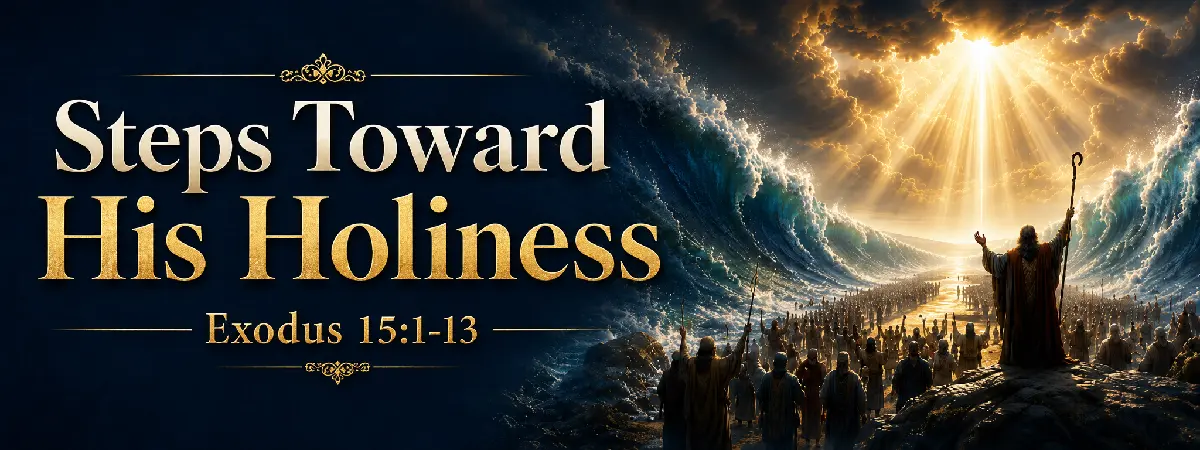
Exodus 15:1-13 Steps Toward His Holiness
“Who is like Thee… majestic in holiness?” Exodus 15 calls us to behold the God who redeems, judges, guides, and graciously brings His people near. Holiness is not learned from a distance; it grows as we draw near to the Holy One.
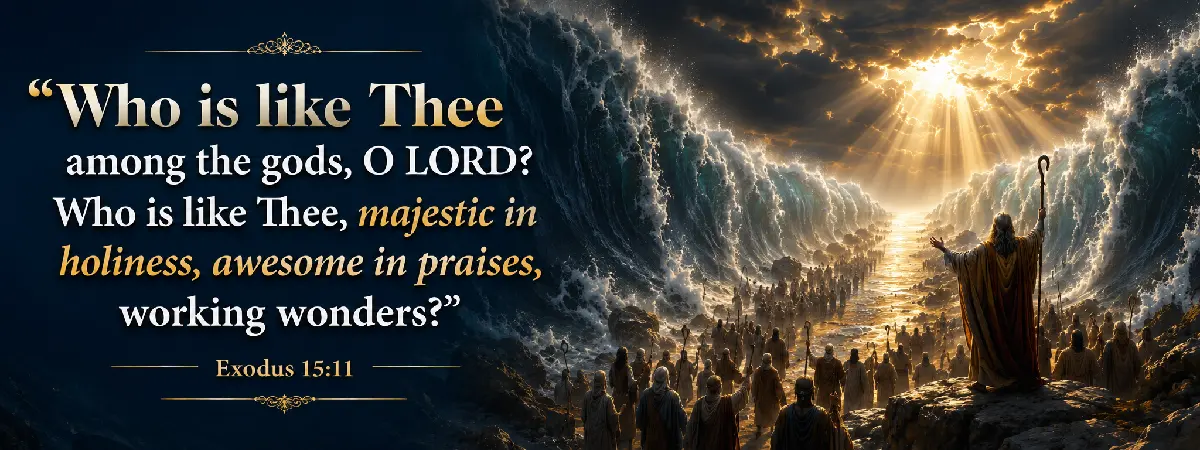
“Who is like Thee among the gods, 0 LORD? Who is like Thee, majestic in holiness, awesome in praises, working wonders?” (Ex 15:11)
I wonder how different we are from the people called by God to come out of Egypt. They knew very little about God; He was the God with no name. He was the God of their fathers—Abraham, Isaac, and Jacob. This was all they knew. I recently had the chance to watch the end of the classic movie The Ten Commandments. Although it’s not always accurate, this film is worth watching again and again. It includes cultural customs and background information that greatly aid in understanding the Book of Exodus. (However, do skip Moses’ love affair with Pharaoh’s daughter!) Some people describe the crossing of the sea as less than a miracle because the sea was low at that time of year. There are significant interpretational problems with this.
First, the Egyptian army was destroyed. Whatever caused the Israelites to cross at the right time also disastrously wiped out the strongest army in the world.
Second, this event became a major source of Jewish tradition, helping preserve their identity for many years. Notice the song here in Exodus 15 that was sung repeatedly. The Exodus marked the birth of their nation. What they saw and experienced so deeply impressed them with God’s power, stripping away their reservations. They praised and exalted Him, the One they were quickly coming to understand.
The holiness of God must sometimes be examined analytically; this is necessary and beneficial. However, without a subjective experience of God’s holiness—as we have here—we will never truly attain this holiness. God’s holiness is developed through contact. I am not implying that people cannot forget what they have learned. The books of Exodus and Numbers often remind us how quickly humans can forget God's holiness. We will leave that study for another time. But how can we draw closer to this holy God?
First, I want to reflect briefly on what was learned from crossing the sea and how this event can inspire us in our pursuit of God's holiness. For if we gain the whole world but lose our souls, what benefit is there? If our behavior only mirrors that of our peers, can we truly call it holiness? Authentic holiness only comes from knowing the Holy God. Hebrews 10:25 states, “Pursue peace with all men, and the sanctification without which no one will see the Lord.” This song of deliverance offers six insights to help us better understand the Lord’s holiness.
1. Take Joy in His Ways (Exodus 15:1)
“Then Moses and the sons of Israel sang this song to the LORD, and said, ’I will sing to the LORD, for He is highly exalted; The horse and its rider He has hurled into the sea.’” (Exodus 15:1).
Moses and the Israelites sang this song. Not just the preacher or the prophet stood amazed at God's works. It's not enough for only the leaders to encounter God. They might see many great things, but if they are the only ones who know God, how will that benefit you? God wasn’t calling just individuals but a nation. Each of us needs to stand amazed at God’s holy ways. It wasn’t just Moses who crossed the sea, but all of God’s people. And what they witnessed and experienced gave them a song of joy. They sang and shouted together. Praise God!
Application
Some of you probably wish you had seen this miracle, but in reality, you longed to see and know a much greater work of God when He sent Christ into the world. One of the main themes of the book of Hebrews is that Christ is greater than all the Old Testament types. Hebrews 1:1-2 states, “God, after He spoke long ago to the fathers in the prophets in many portions and in many ways, in these last days has spoken to us in His Son, whom He appointed heir of all things, through whom also He made the world.“
Christ was a better priest; He was superior to the angel. He served a better covenant than Moses and belonged to a higher priesthood, etc. We praise the glory of the revelation through Jesus Christ! If we have encountered Christ through faith, then we have truly met The Lord of the Exodus. Some may feign their worship and praise. They enjoy the experience, the sensations, the crowds, the silence, the noise—the focus—but we desire to glory in the great work of Jesus Christ.
Jesus Christ must be the center of our praise. Resist the temptation to drown out the truth. I oppose the emphasis on sensationalism and sensualism, even if it attracts people. It is wonderful to have different instruments, but when they overpower the melody or the beat becomes more prominent than the message, we must return to simplicity. We prefer to meet Jesus Christ through the truth. We prefer to focus on His glory rather than just feeling good. We want to hear the story of Jesus again and again. And through music and instruments, deepen our meditation on His story so that, like the Israelites, we may glory in God’s greatness. Surely there is none like Him!
2. Acquaint yourself with Him (Exodus 15:2)
As I mentioned earlier, the Israelites at this point did not know who their God was. The Pentateuch had not been written yet. They knew nothing except what was passed down from Abraham and his descendants, which was over 400 years old by then. Their understanding was very limited, but it was enough to set them apart from other peoples. In Exodus 15:2, they said, “The LORD is my strength and song, And He has become my salvation; This is my God, and I will praise Him; My father’s God, and I will extol Him.“
They were beginning to see who the God they worshipped truly was. I believe we should view our whole lives through this lens. We are gradually getting to know our God better. Consider the many years as slaves in Egypt; they knew very little about God, but they held onto their faith nonetheless. They could now confidently affirm that the God they worshipped was indeed powerful. Sometimes, He visibly intervenes in the world’s affairs. In fact, through this event, they could sense God’s special call upon them as a nation. Their slavery became a blessing, allowing them to grow significantly in faith.
Application
Most of us have already heard of God. We are not starting from near scratch. But this doesn’t mean we truly appreciate Him. There is a strong tendency for second-generation Christians to never fully understand the joy of their salvation. If only we could see more clearly the great chasm between the saved and the unsaved. If only we better understood how He has bestowed upon us His great spiritual riches. Why would we ever be ashamed of being Christians? We have forgotten what it means to be God’s children! We need to draw near to God to refresh our understanding of who He is that we worship.
3. Familiarize yourself with His Name (Ex 15:3)
As the film The Ten Commandments pointed out, they worshiped the God of their ancestors. They were not very clear about what His name was or what He was like. Notice in this verse that as they learn about His attributes, they can also get used to His Name, the LORD. Also, note that the word ’Lord’ with lowercase letters has a completely different meaning than ’LORD’ with capital letters. Moses wanted to know God. He was not satisfied that others merely knew Him.
Notice how many times in this chapter, ’LORD’ or Jehovah is used. This is because they were forming impressions from their experiences and connecting them with His Name. Previously, He was known as the God of their Fathers. Now, He is becoming their God. More than that, His attributes and person are becoming associated with this Name. Moses had earlier told them about Jehovah and what Jehovah, their God, wanted, but it was beyond their understanding. But now they have clearly seen through God’s actions what He is like, at least to some degree. After this event, when these Hebrews heard God’s name, they would associate it with His great saving power.
4. Meditate on His Purposes (Exodus 15:4-10)
They further understand God’s character by observing what He did to their enemies. One might quickly assume in this situation that God didn’t like the Egyptians. This would be a shallow conclusion, similar to many judgments made by courts today, that a person’s actions are due to race. But that is hardly the case here. We see that God had no issue burying a group of top soldiers in an unknown burial ground under the sea. After all, they were the enemy. The soldiers opposed God's plans, and so “Thou does send for the Thy burning anger, and it consumes them as chaff.” Clearly, God was rejecting those challenging His purposes.
On the other hand, we must remember that God initially used small miracles to try to persuade the Egyptians, but they refused to learn. God intended to deliver His people from the enemy's grasp. The destruction of the Egyptians was a key part of this miraculous crossing, symbolizing their freedom from their captors. They were freed from the Egyptians. They were baptized in the sea, a sign of a new life under God. They entered as free people but somehow became captives.
Application
We must meditate on deeper truths to truly know God. Some people rely solely on the Four Spiritual Laws for their spiritual life. They still use bottles instead of learning to use their teeth. They prefer milk over meat because it's more convenient, preferring to be spoon-fed rather than disciplined in meditating. We need to start accepting God’s Word for what it truly is. God’s Word reveals the real picture. Sometimes we think the local TV station will give us the day’s most important news. But forget that!
- Only God can reveal how you were chosen before the foundation of the world in Christ.
- Only His Word can remind you of how special you are to Him, regardless of how you feel.
- Only the Scriptures will challenge you to set aside your lusts and live by the Spirit.
- Only the Scriptures truly convince us that "blessed is the man that walks in the Lord’s way." Who else believes this? Who else will tell you? The Israelites saw the Egyptians drown. They understood that God, for reasons unknown, brought them to stand on His side. They saw their enemies had no chance. They saw God’s power for what it was. God’s will was everything. Either you are for it or against it; either you are with God, or you are on your own, facing His holiness.
5. Glory in His Holiness (Exodus 15:11)
Next, let's reflect on verse 11, which says, “Who is like Thee among the gods, 0 LORD? Who is like Thee, majestic in holiness, awesome in praises, working wonders?”
What did they learn about God’s holiness? What does the phrase “majestic in holiness” mean to them? We gather from this phrase that they see His holiness as the defining feature of God, setting Him apart from and above all gods and powers. His holiness is His crown and glory. His purpose and character are reflected in the unique way He accomplishes His will. Who will question God about why He waited so long to deliver them? There is a reason, even if we do not know it. Or you might wonder why He brought Abraham, Jacob, and all their descendants into a land where they would become slaves. We might not get answers that completely satisfy us. But it doesn’t matter whether it pleased them or us. God is joyfully fulfilling His holy purpose.
One might say the most modern way to describe ‘holy’ is ‘special.’ It means different and set apart. God’s unique and distinct ways, seen in His will and everything He does, set Him apart from others. We could criticize His ways and decisions, but that would only reveal our lack of belief in His holiness. We simply don’t grasp how mighty He is. We don’t understand how His will is everything, and anything against His will must be destroyed. No wonder Proverbs speaks so often about humbling the proud. In the end, His will is the only thing that truly matters.
Application
“Who is like Thee among the gods, 0 LORD? Who is like Thee, majestic in holiness, awesome in praises, working wonders?” This, of course, is the verse I have been trying to focus on today. It is the verse that speaks of God’s holiness. These words crystallize what we have been learning today. God is holy; He is majestic in His holiness.
I haven't often used the word 'holy,' but it’s what I want to convey: God is awesome, greater than us, with a different will. All His ways are special, and if He calls us to join, we should be exhilarated. Understanding God's glory makes participation exciting.
Holiness isn't learned overnight. We often offend Him unknowingly and miss how radical He is. His presence is overpowering. Roller coasters, though intense and safe, pale compared to approaching God. People assume God will comfort us in sorrow, but He created the world and our senses—these are great, but overlook our spiritual nature. Prayer, involving every part of us, is far more radical than physical experiences.
God is awesome! He is majestic in His holiness. Dare you draw near and see Him? Dare you bow your knees and submit to His will? For then, He will take you on a path that your journal can only remind you of the things you couldn’t write down.
6. Delight in His Kindness (Exodus 15:12-17)
People who know of God’s grace are humbled. They are touched that God has brought them into His Holy will. Somehow, these wayward people were led to experience the greatness of God. The soldiers also learned about God’s greatness, but they were on the wrong side. They were underwater instead of above it. They no longer had voices to declare His power. They were judged under His anger. Grace properly humbles us because we see that we are being treated far better than we deserve. God used the Israelites’ bondage to make them very grateful and dependent on Him.
Application
I will not speak long on this because I have already mentioned this thought in verse 13. God has not only chosen us to join Him in His plan to remake His glorious purpose, but He has also taken us, who don’t deserve to be part of His program. I suppose this adds some color to the black-and-white picture. This is the third dimension of our relationship with God. We simply didn’t deserve to be there. This is the story of Exodus. The Israelites didn’t deserve to be with God crossing that sea, just as we don’t deserve to be with God as we cross into the heavenly realms. Our lives are filled with various sins. If we don’t complain, we envy; if we aren’t playing the game of self-pity, we are ungrateful. Step back and see the big picture the Lord is painting; it is simply marvelous. The Lord has redeemed us, sinful people, with His own blood on Calvary. Why would the Lord do such things for us? Listen to Exodus 15:17-18, “Thou wilt bring them and plant them in the mountain of Thine inheritance, The place, 0 LORD, which Thou hast made for Thy dwelling, The sanctuary, 0 Lord, which Thy hands have established. The LORD shall reign forever and ever.”
Summary
We need to move from the ancient to the modern, from the past to the present, and from them to us. It's not enough to get excited about what God did for the Israelites 4,000 years ago. We should find clues in how God revealed Himself to them and through all the other special ways He's shown Himself to His people throughout history. The goal isn't to become a history buff but a pilgrim growing in knowledge of God. The main point of this passage is to challenge us about our own relationship with God and our understanding of His holiness. Jesus Christ isn't just an experience for some people in the past; He is present here and now, largely ministering through the Holy Spirit. Have you truly met Jesus Christ? We need to go beyond just knowing about our Lord. God wants us to step out of our worldly darkness and move closer to Him. Let’s do this right now, in the silence of our hearts. “Each day we want to get closer to you, Lord. Let there not be an exception.”

Bible Study Questions
- Why did Moses and the sons of Israel respond to God’s deliverance with song rather than silence?
- How does Exodus 15:2 show that Israel was beginning to know the LORD personally?
- What is the difference between knowing about God and becoming acquainted with Him through faith and worship?
- How does the destruction of Egypt’s army reveal God’s holy purposes rather than random judgment?
- What does “majestic in holiness” teach us about God’s uniqueness and glory?
- How does the Song of Moses help Christians understand the greater saving work of Jesus Christ?
- What practical step can you take this week to draw nearer to God’s holiness rather than merely admire it from a distance?