Written by Paul J Bucknell on May, 07, 2026
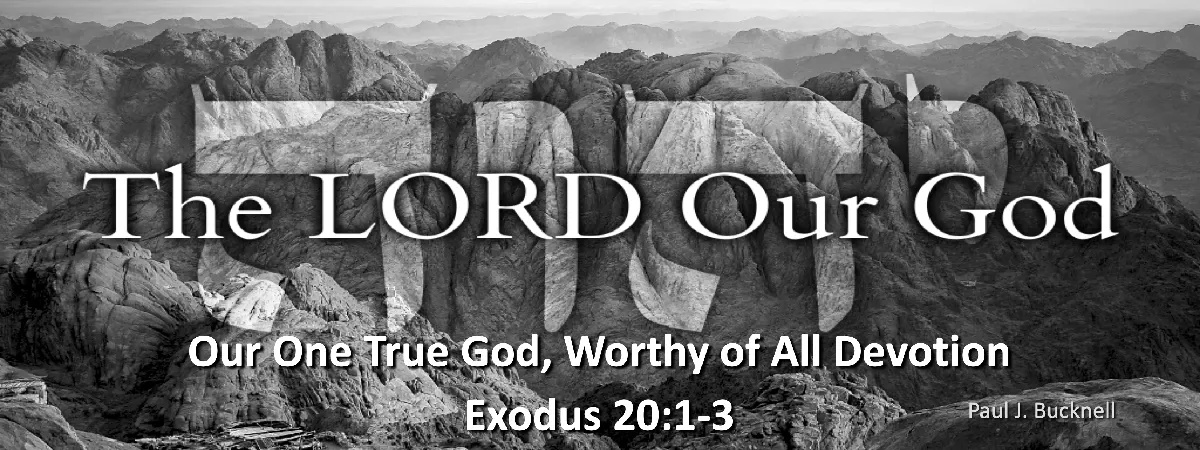
Exodus 20:1-3 Our One True God, Worthy of All Devotion
The First Command: Exodus 20:3
Then God spoke all these words, saying, 2 I am the LORD your God, who brought you out of the land of Egypt, out of the house of slavery. 3 You shall have no other gods before Me (Ex 20:1-3).
The Ten Commandments are perhaps the most famous part of the holy scriptures worldwide. Even in the non-churched world, many have seen the movie about the Ten Commandments, but all of this pales in light of the reality of meeting God as the Lord so carefully pointed out in these first three verses. Before continuing, let us gain a larger perspective of the scene. Why are the Ten Commandments being given, and what is their general meaning?
The Background of the Ten Commandments
From a quick glance at the two recordings of the Ten Commandments (Ex 20 and Deut 5), we see the same tremendously frightening scene. At both the beginning and the end of the giving of the Ten Commandments, the same kind of thunder and lightning images strongly emphasize that the Giver of these words and the words themselves are all important. Toy with His words and you mess with God.
And all the people perceived the thunder and the lightning flashes and the sound of the trumpet and the mountain smoking; and when the people saw it, they trembled and stood at a distance. 19 Then they said to Moses, “Speak to us yourself and we will listen; but let not God speak to us, lest we die.” (Exodus 20:18-19)
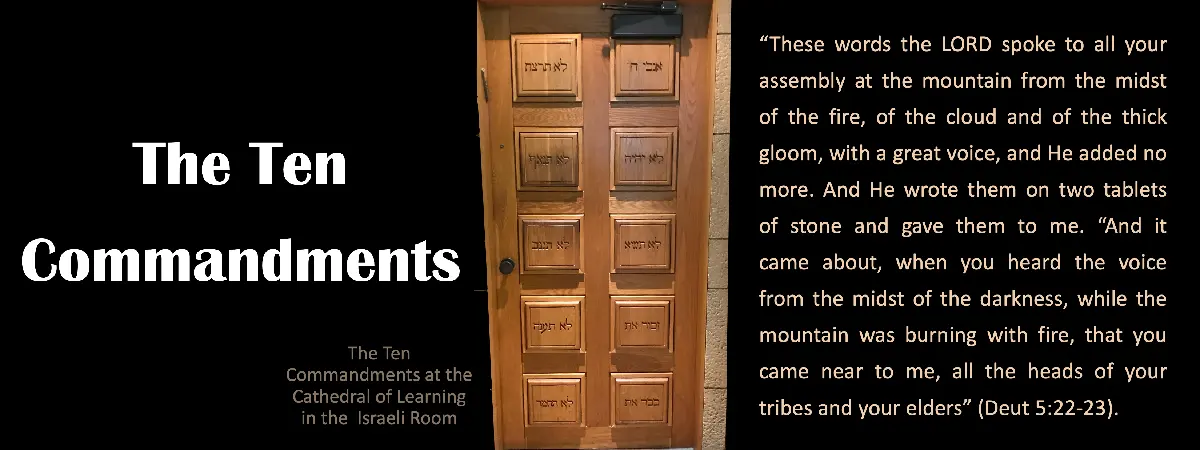
These words the LORD spoke to all your assembly at the mountain from the midst of the fire, of the cloud and of the thick gloom, with a great voice, and He added no more. And He wrote them on two tablets of stone and gave them to me. And it came about, when you heard the voice from the midst of the darkness, while the mountain was burning with fire, that you came near to me, all the heads of your tribes and your elders. (Deut 5:22-23)
God first established the covenant—what is now called the Old Covenant between Him and His people—when He led them out of Egypt. God appointed them to meet Him outside of Egypt. The passage in Deuteronomy records the second giving of the Ten Commandments, as He renewed them with the second generation of Israelites, knowing that the first generation had died in the wilderness due to their sins. While most of the recording of the Old Covenant was done on the mountain between God and Moses, the issuing of the Ten Commandments was also given to the people, causing great consternation among them so that they sought Moses to talk to God alone. I always wondered whether God spoke the Ten Commandments to the people Himself, and the Deuteronomy passage supports this conclusion. “These words the Lord spoke to all your assembly,” and then specifies in verse 22 that it was these words He wrote on the two tablets of stone.
For clarity, the Ten Commandments do direct what we ought and ought not to do, but they simultaneously point out that we have failed God. Trying to do them is good, but it will not make you righteous. This is where the New Testament comes in by providing a true and acceptable righteous sacrifice in our place, even the Lord Jesus, to take God’s due wrath upon us and placing it on His Son Jesus, finding forgiveness and reconciliation with God. The Ten Commandments are an invitation for the people of God to come near to God and be blessed. Because they are fundamental attitudes and behaviors, our societies will do well when they observe them, but if they fail to maintain and affirm them at any point, those societies will decline and eventually die.
Where We Fall Short
The command not to have other gods alerts us to our own tendency to believe, adopt, and follow other entities that promise what our hearts pursue.
- We are gullible to fake guidance. We live in the age of feelings where we are told to follow our feelings. Fake media feeds propaganda to our minds, trying to convince us that immorality is right and good.
- We often let our desires take priority over God's cautions and priorities. God has spoken, yet we still idolize our desires.
- We frequently underestimate God’s glory and His wonderful way of caring for us. The Israelites were stubborn and filled with unbelief, but are we really much better?
- We quickly trust the promises of others over the promises of our God, who bought us with His own blood. Why are we so willing to rely on other things to fulfill us when it is our God who sacrificed Jesus to die for us?
The commandments, including the first, reveal a huge gap in our souls. We are willing to quickly betray our faithful God and depart for unproven gods who are not committed to us.
Before The First Command (Exodus 20:1-2)
It is most helpful to watch what God first announces before explaining the first command. God’s preliminary words, if taken seriously, would or should erase many of our fears and misunderstandings about God and the Ten Commandments.
Then God spoke all these words, saying, 2 I am the LORD your God, who brought you out of the land of Egypt, out of the house of slavery (Ex 20:1-2).
- God is Creator (Is 43:1)
Although God as Creator is not explicitly mentioned here, we should remember that the Pentateuch—the first five books of the Bible—are one unified book. This means that the introduction of God is not arbitrary but is well established in the initial chapters of Genesis. In Exodus, God further clarifies His identity.
- God communicates
How astonishing that God speaks! Many times, the Old Testament mocks the false gods who have mouths but cannot speak. Here, the Lord, without a mouth, boldly speaks startling words: “Then God spoke all these words, saying” (Ex 20:1). God has much to share with us. He made humans in His likeness so they can understand what He passes on. There is a general revelation where God reveals Himself through creation, but these are specific words He speaks to us — including the Ten Commandments. His words are directive, meant to be understood and obeyed.
- God is knowable
Some religions view the Creator as aloof and powerful. While He is indeed powerful, notice how He desires people to understand who He is. This ability to communicate with humankind is truly remarkable. It then leads us to the next point.
- God is relational (name)
God is not just knowable but personal, that is, relational. The Old Covenant is built on passing information about His own expectations, but He also introduces His Name. Some have difficulty finding His Name in the first two verses because of poor translations. The word “LORD” in all capitals is God’s poorly translated name, sometimes called Yahweh and at other times Jehovah (with vowels added to the consonants). The four-letter Hebrew word reads from right to left.
We are, therefore, called not only to know Him as a powerful Creator but also as a personal one. This is why it is not wrong for people to say that He desires a personal relationship with us or even to refer to salvation as the process by which we are reconciled with Him, granting us the privilege to become children of God. Christianity as a religion often falls short in this aspect.
- God is the Savior
The Lord highlights the facts of His rescue of the Israelites from the Egyptians. Remember, the Old Covenant, including the Ten Commandments, was given shortly after they escaped from Egypt, one to two months after the fact. Now they were at Mt. Sinai before God. God had saved them from their plight. The Lord waited until they cried out to Him before He came to help them, and so He came in answer to their request. The Ten Commandments were part of the agreement on how the Israelites could live before God without being judged on the spot. Holiness means a shaping of one’s character and decisions.
- God is a redeemer
Moses does not explicitly mention God’s redemption of His people in these two verses, but the idea is implicit, especially if one is familiar with Exodus. Redemption refers to the process by which the Lord saved them—that is, Yahweh bought them. He spared their firstborn from the Angel of Death, making them His own. They escaped the oppressor’s chains to be bound to their Creator’s loving commands. The Lord arranged this deal, thus freeing them to become His. Now, they are bound to obey Him, which is for their good.
The Lord presents Himself as a mighty, powerful God, evident in the sound of thunder and lightning, but also as a God who cares for them and desires close fellowship so that He can bless them abundantly.
The First Command (Exodus 20:3)
You shall have no other gods before Me (Ex 20:3)
God wrote the Ten Commandments with His finger on two tablets. The term “Decalogue” describes these Ten Commands; it comes from Greek meaning “Ten words.” They protect society from grave evil and remind people of God’s work in their lives. When a society or nation departs from these commands, such as by committing adultery, the society begins to decline, as we see in our time.
I will focus here on the first command: “You shall have no other gods before Me.” Like the other commands, it is phrased in more legal terms, which limits or disguises the true purpose. God’s real goal is not just that we have no other gods but that we love Him devotedly. This special emphasis is seen throughout the Bible, but this law sets a boundary to help us stay attentive and not slip off the moral edge of life.

ONLY REVERE JEHOVAH (LORD)
“You shall have no other gods before Me.” (Ex 20:3)
We are to keep God supreme in our hearts and lives. No one or nothing ought to distract us in our devotion and fear of God.
A constant test is before us: Who do you love and trust more? 1 John 2:15-17 is a picture of this prohibition in New Testament terms.
“Do not love the world, nor the things in the world. If anyone loves the world, the love of the Father is not in him. For all that is in the world, the lust of the flesh and the lust of the eyes and the boastful pride of life, is not from the Father, but is from the world. And the world is passing away, and also its lusts; but the one who does the will of God abides forever” (1 John 2:15-17).
The Old and New Testaments often affirm the positive devotion that the Lord desires and commands. I’ll list some of these verses.
“And you shall love the LORD your God with all your heart and with all your soul and with all your might.” (De 6:5)
“And now, Israel, what does the LORD your God require from you, but to fear the LORD your God, to walk in all His ways and love Him, and to serve the LORD your God with all your heart and with all your soul” (De 10:12).
“And it shall come about, if you listen obediently to my commandments which I am commanding you today, to love the LORD your God and to serve Him with all your heart and all your soul” (De 11:13).
“Moreover the LORD your God will circumcise your heart and the heart of your descendants, to love the LORD your God with all your heart and with all your soul, in order that you may live.” (De 30:6 )
In the New Testament, Jesus’ response is again most noticeable.
“Teacher, which is the great commandment in the Law?” And he said to him, “You shall love the Lord your God with all your heart and with all your soul and with all your mind” (Mat 22:36-37).
“And you shall love the Lord your God with all your heart and with all your soul and with all your mind and with all your strength” (Mark 12:30).
“And he answered, “You shall love the Lord your God with all your heart and with all your soul and with all your strength and with all your mind, and your neighbor as yourself” (Luke 10:27).
Jesus not only taught it, but lived out this ultimate devotion to God. When tempted, He maintained His allegiance to the Father. When praying, He sought God’s will first. When dying, He showed that He had no other food but to do the will of God. Jesus could always trust the Father with His will and with the grace to carry out what the Father had for Him.
Summary
The commandment then calls everyone to avoid anything or anyone that distracts or motivates them to pursue anything above the Lord. God’s choices become our choices by default. Because the foundation of the first commandment is true and fully trustworthy, meaning there is no other god who helps or satisfies, living in harmony with the Lord truly leads us to the best life possible. We are considered foolish when we choose to worship others or ourselves rather than engage in wholehearted worship of God, as only He can truly lead and satisfy. This will be further explained in the extended application section.
Application of Trust
God proves in the Exodus how He, their LORD, was fully able and committed to lead and provide for them. Our idolatry, then, is based on the mistaken idea that God is incapable or inferior to the way that other things or people lead and provide for us. Do you see why God’s people are often rightly accused of spiritual adultery?
We have abandoned our heart and commitment to God, our faithful God. In the opposite chart, you will see eight successive steps that reveal my way of thinking about this. It starts with the first command, of course, which is that we are not to have any other gods before us, and we continue to build on that one solid foundation, trying to see where this leads.
Second, the Lord gives us this first command because we do not need any other gods. God is all-sufficient. Nor (3) can other gods help us, because with God’s help, we have all the help we need. Fourth, God is the One who loves us. We might focus on other things or people, but they have no love for us. Only God loves us completely and sent His Son to die for us. And (5), as verse 1 clearly states, God is the One who rescued them from Egypt. God proved His devotion and ability to help us. Therefore, God convincingly watches over us (6) and (7) we belong to Him. We are safe and secure when we trust only in the Lord and ignore the promises and offers from these other gods.
So, God is trustworthy, having both proven it and committed Himself to us. But this is why all doubt, fear, and other sins are mostly driven out of unbelief. We don’t believe God’s words and are often tempted to rely on these other ‘gods’.
Application of Devotion
God is faithful, caring, and kind, so we can easily delight in and worship Him. But He is also holy, demanding our full hearts’ attention. We must also refrain from the things He does not want. Our decisions to be faithful, obedient, and kind, among other virtues, become general commitments to love God, leading to a multitude of endless righteous personal choices, including the clear rejection of elevating our pleasures above God’s purposes. (A later commandment addresses these.) God deserves our devotion, especially because He has graciously sacrificed Himself to save and support us through eternity.
Application of Knowledge
We need to recognize how knowledge influences our opinions and attitudes. Many of us have gone through formal education, sometimes with damaging results. For example, certain aspects of our education system plant seeds of sexual immorality in young minds, but God desires to have full control over guiding us. Morality begins with what God says, not with what humans want to believe or prepare. There is a fierce battle for our minds, and as God’s people, we must set aside and implement regular routines to hear from Him. Daily, we should meet with Him, seeking His guidance for the day and insights into how to fulfill our overall commitment to the Lord in daily life.
Rejection of God’s Word is rebellion against God Himself. When God speaks, we ought to listen. Ignoring His voice is like shouting Him down with our prideful ideas. The willingness to adopt opposing standards is rebellion, and whenever society, family, or courts oppose God’s standards, trouble is surely on its way.
One clear example of spiritual adultery is an obsession with social media. Our minds and emotions become so consumed with news, stocks, stories, videos, and more that we hardly leave time to reflect on what God says. Then, we arrogantly claim, “We don’t have enough time to pray.” We spend hours on social media and can’t find five minutes for God. While much of social media is neutral—neither good nor bad—it entangles us, often neglecting the important act of seeking God.
Application of Time Management
Not prioritizing other gods over God means we cannot allow or welcome any ungodly aspects of our lives to infiltrate our schedule. We only do what is expected to please God (Col 3:17). If we do things that do not please God, then we are elevating something higher than God and putting other priorities above Him. Fully convinced of His greatness and His brilliant ways, we can then allow Him and welcome Him to take charge of our schedule. Disobedience to the first command is the root of all our flaws and moral deficiencies.
Application of Popular Thought
Many people have accepted the thoughtless mantra that “All religions are the same” and allowed it to influence their lives. God states that only worshiping Him is correct and beneficial, leaving no room for other gods or pretenders. All gods, not just some, serve as distractions from the true God whom people should worship.
In church, we often hear another faulty statement: “Jesus is my Savior but not my Lord.” Think about how this relates to the command to have no other gods. How could someone claim to worship God but then say they are not obligated to obey Him? It’s hard to believe anyone could think they are on God's side when their hearts are far from Him.
Some Christians secretly tell themselves, “It doesn’t matter,” meaning they believe one more small sin doesn’t affect their relationship with God. This sin isn’t just about giving in to fleshly desires; it’s also a denial of God’s authority, turning their heart away from Him. No sin is insignificant when it results in rejecting and denying God’s care and promises.
Other believers get caught up in complaints like, “God doesn’t care for me.” They accept a reality where God’s presence seems absent, even though they mention His name. But God does care, even if they don’t feel it. They expect God to act according to their wishes instead of His will. Job reminds us, “The LORD gave and the LORD has taken away. Blessed be the name of the LORD” (Job 1:21). Our lives should not chase after our small expectations but should trust what God deems best for us. Focusing on our feelings challenges our loyalty—who do we truly worship? God or ourselves?
Just as God revealed His power and commitment to deliver His people from Egypt through the Ten Commandments, we must fully trust our Creator, who commanded His Son to die for us. If such a wonderful Lord cares for us, His love should deeply move us to return to Him—humbled, cleansed by Christ’s blood, full of gratitude, and praise.
Where does worship begin?
How do we know if we have obeyed this command not to have any otus? Some people believe that simply acknowledging God's existence is enough, but God commands us to have no other gods. He desires exclusive worship. Others say they follow a religion that worships the one true God, the Creator, but simply recognizing God’s presence is not the same as giving Him their hearts or giving their attention and devotion to people, gods, or things.
The youth might come to church because of their parents’ wishes, but this only partially satisfies God, as they may be thinking about a sports team, computer games, or a video to watch later. But are young people any different from older people in what they think? What do you dream about? Are your dreams inspired by yourself or made with and for God? Still, some say they know God and have a personal relationship with Him, but that does not necessarily mean they elevate their relationship with Him as all-consuming and controlling.
Others try hard to trust God but still allow worries, fears, and interests to distract them, causing conflict with God’s desires. They still hold onto the presence of other gods in their lives. God seeks those who fully devote—heart, soul, and mind—themselves entirely to Him, removing all obstacles of self-interest or personal gain to please Him.
Where does worship end?
Worship begins with obedience but concludes in joy and delight in God’s faithfulness. When the righteous man or woman obeys God, they then see His faithfulness in their lives. In everything they do, they acknowledge God’s presence and purpose, and therefore pray without ceasing. These are the ones who fully delight in their God because of His faithfulness to them. The things of the world fade away as God becomes increasingly central in their lives. The Psalmist’s conviction beautifully affirms this:
“The righteous man will be glad in the LORD and will take refuge in Him; And all the upright in heart will glory” (Psalms 64:10 NASB).
Our zeal for excellence, if rooted in perfectly pleasing the Lord, can be wonderfully enriching. Since we are motivated to serve and please Him, we can dedicate ourselves wholeheartedly to Him and love Him with all our heart, soul, mind, and strength.
The source of excellence can only be found through full devotion to God. Being fully convinced of God‘s glory enables us to live thoroughly committed to Him, allowing Him to examine our imperfect and flawed areas, and seeking Him to fill those very gaps. Excellence cannot exist without God because He unites with us to discover and define that excellence. We cannot be truly excellent without Him, and honestly, we wouldn't want to be, because such supposed excellence without Him is an illusion.
Bible Study Questions on Ten Commandments
- Why does God begin the Ten Commandments by declaring who He is and what He has done before giving the command?
- How does “You shall have no other gods before Me” reveal both God’s authority and His love for His people?
- What modern “gods” compete for our trust, affection, obedience, and attention?
- How does Deuteronomy 13:3 show that false teaching tests the heart’s love and trust?
- Why are God’s commands compared to protective garden walls rather than restrictive barriers?
- How did Jesus perfectly fulfill the command to love the Lord with all His heart, soul, mind, and strength?
- Where do you need to repent, rejoice, and renew your devotion to the Lord as your one true God?