Our Facebook

2 Peter 1:17 Greek Textual Analysis - “This is My Beloved Son” — Video
In this video, Paul J. Bucknell explores 2 Peter 1:17, where God the Father declares of Jesus, 'This is My beloved Son with whom I am well-pleased.' We examine three main textual variants found in ancient manuscripts and explain their differences. The differences appear due to scribal habits or language style, with the second variant enjoying the widest manuscript support. Despite minor variations, the central message remains unchanged: God affirms Jesus as His Son, the beloved One. This study encourages confidence in the reliability of Scripture while deepening our understanding of God’s testimony about His Son. We contrast the manuscripts favoring the older ones with those favoring the later ones, but the majority of manuscripts.
Key Points
• Three textual variants exist for 2 Peter 1:17, but all affirm the same meaning.
• The second variant has the strongest manuscript support. Almost all manuscripts support it.
• Textual differences arose from scribal mistakes and the desire to properly communicate, not theological disputes.
•Textual criticism aids us in dispelling doubts about the reliability of the New Testament.
Hashtags: #2Peter #BibleStudy #TextualAnalysis #ScriptureReliability #JesusChrist #GodsWord #Discipleship
Corresponding Article
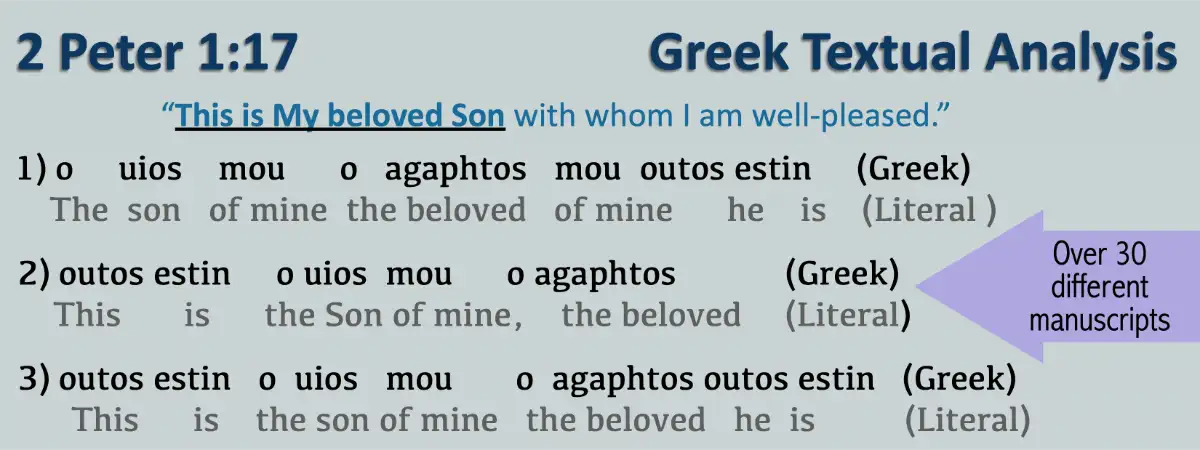
2 Peter 1:17 Greek Textual Analysis
We examine the textual variants found in ancient manuscripts for 2 Peter 1:17. Despite minor variations, the central message remains unchanged, encouraging confidence in the reliability of Scripture.






© 2022 Biblical Foundations for Freedom. All rights reserved. CodeoStudio