Written by Paul J Bucknell on March, 11, 2026
Romans 1:18-21 The Three Stages of Moral Decline - Stage 1: Desertion to Deception
In Romans 1:18–32, the Apostle Paul lays out a sobering progression of human rebellion against God. Far from being ignorant, humanity has clear evidence of God’s existence and character through creation itself. The world often argues that people cannot be held responsible for sin because God is invisible and difficult to understand. But Paul dismantles this excuse entirely. Paul presents a clear three-stage process that reveals both God’s patience and His wrath
The First Stage of Moral Decline
Stage 1: Desertion > Deception (Romans 1:18-21)
People first refuse to honor and thank God. This marks the point of desertion that separates them from God. It begins by ignoring His kindness. Futile speculations (deception) then follow. Desertion is the abandonment of a duty or responsibility. Deception happens when someone believes something is correct, even though it is actually wrong.
“For the wrath of God is revealed from heaven against all ungodliness and unrighteousness of men, who suppress the truth in unrighteousness, because that which is known about God is evident within them; for God made it evident to them. For since the creation of the world His invisible attributes, His eternal power and divine nature, have been clearly seen, being understood through what has been made, so that they are without excuse. For even though they knew God, they did not honor Him as God, or give thanks; but they became futile in their speculations, and their foolish heart was darkened.” (Romans 1:18-21).
Departure of Truth - Stage #1
Taking God out of politics, science, religion, and education
The idea that the heathen are truly uninformed is not accurate. God’s word speaks differently. People commonly recognize much of God through natural creation. Their awareness of God was revealed through nature (Romans 1:18-20). An example of this is seen in the judgment of Sodom and Gomorrah, which were considered heathen cities. They established a society that was directly opposed to the kingdom of God.
As God’s Word expands the revelation of His truth, so does the departure from and opposition to it also grow. When Jesus sent out 70 disciples, He said that if they are not welcomed, they should wipe the dust off their feet because, “it will be more tolerable in that day for Sodom, than for that city” (Luke 10:12). Nations that have heard the gospel and rejected it are in a worse position than those that haven’t heard the truth. All will face judgment, but some more severely.
We see this drift from truth and the spread of falsehood everywhere. If judgment was harsh for a city like Sodom, which lacked God’s Word, just imagine the blindness in our society, which, despite having the clear Word of God, actively promotes sinful leaders involved in homosexuality, adultery, and lying. God clearly speaks against these behaviors and will bring judgment upon them!
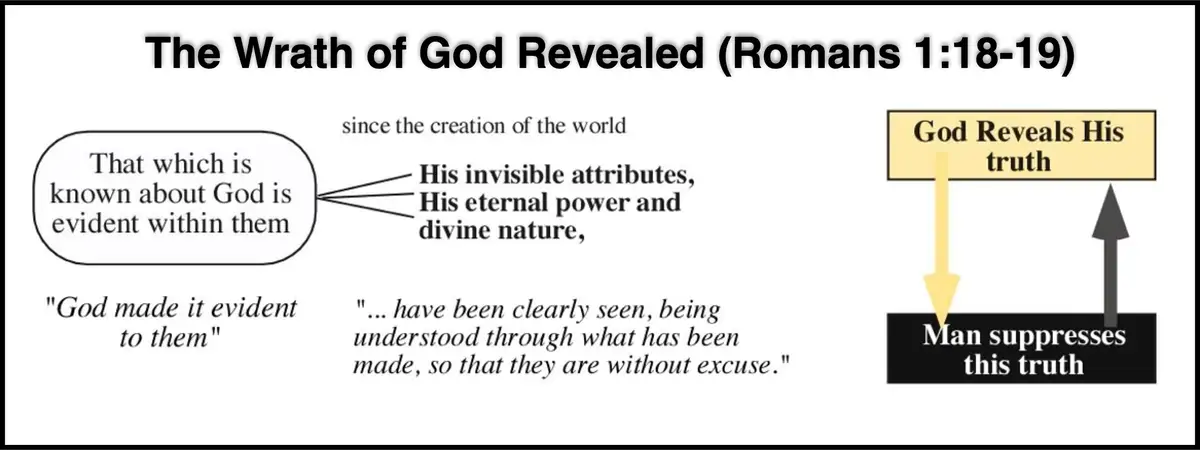
The invisible qualities of God are understood through what He has created. Man often reduces God to his own image and makes idols. God condemns these acts of idolatry because a physical representation of what He made cannot fully express His glory and because they distract from what truly matters. Some aspects of God’s invisible qualities are revealed through observable creations. Creation is a clear reflection of God’s truth that cannot be ignored (see Psalm 19). There is no excuse; every person is accountable to the creation. The phrase ‘clearly seen’ highlights the obvious knowledge of God’s invisible attributes. The evidence is so clear that even invisible things can be perceived! Let’s take a closer look at these ‘seen’ things.
Both His eternal power and divine nature are invisible attributes of God that are revealed in creation. This eternal power belongs solely to God. It is the force often referenced in today’s world, a power that exceeds our limited understanding. The word ‘eternal’ highlights the surpassing qualities of this power, which are vastly different from the gods that come and go with each culture and race. The gods devised by man are all subject to the great forces within the universe, but God’s mighty power is only beginning to be understood through the design within creation. It is important not to equate God with this eternal power, as many mistakenly do. The eternal power represents the innate awareness within creation that affirms to each person’s heart that this invisible God is mighty.
His divine nature provides another clear insight into God’s character. While eternal power suggests God’s greatness and infinite reach, His divine nature more distinctly shows His transcendence. The Creator is fundamentally different from His creation. God is beyond man. Although we may not know much about Him, we understand that He is otherworldly. He is not limited by the earth as we are.
Reception of Evil - Station #1
Develop multiple substitute speculative theories (philosophical, moral, social, educational, and personal development)
The first step after rejecting the acknowledgment of God’s existence and involvement in their lives is the emergence of futile thoughts, opinions, and motives. In 1:18, the scripture carefully uses the word ‘suppress’ to highlight both the presence of some form of truth about God and man’s rejection of it. Sensing its rising flow, he tries to silence it. Man quickly becomes speculative in his thoughts. He rejects the truth because it’s easy for him to get carried away in his own thinking. Man continues to raise objections, embrace false religions and philosophies, and offer poor excuses. Their minds become distorted, leading to the development and acceptance of false theories. Darwin, Jung, Freud, and Marx are just a few of the more well-known figures from whom speculative theories have arisen to suppress the truth.
Man often blames God for not providing enough miracles to believe in Him, but God rightly places the blame on man because the knowledge God gave them has been rejected. This futile thinking appears in many theories about us. Most of these are based on the assumption that God does not exist and that man can solve man’s problems. Let’s move on to the next stage, trying to hold man back from a complete judgment.
Romans 1:18-32 Overview | Romans 1:18-21 1rst Stage | Romans 1:22-24 2nd Stage | Romans 1:25-32 3rd Stage

Roman 1:18-21 Bible Study Questions
- What are two ways human beings need to respond to God, considering who He is (21)?
- What did man trade for images in the form of man, birds, animals, or crawling creatures (23)?
- What does it mean to “suppress the truth” in unrighteousness? Can you identify ways this happens in modern culture?
- Why does there need to be judgment? How does God judge people during their life on earth?
- Mankind’s depravity is not looked upon as a one-time decision but as a process. Discover the three steps to this process and identify where God has extended His patience.