Written by Paul J Bucknell on June, 04, 2026
Proverbs 9:10 The Fear of God: The Beginning of Wisdom
True wisdom starts when the fear of Yahweh
awakens the soul to God, holiness, judgment, salvation,
and the difference between knowledge and understanding.
Discover the many nuggets of truth hidden in this one verse about the fear of God! Let’s start the exploration. We will analyze the first line, then see how the second line builds on it.
“The fear of Yahweh is the beginning of wisdom,
and the knowledge of the Holy One is understanding.” (Proverbs 9:10, Legacy Bible)
1. The Great Benefits of Fearing God (Proverbs 9:10a)
“The fear of Yahweh is the beginning of wisdom.”
The fear of Yahweh is the beginning of wisdom. The fear of the Lord is that reverence or ‘healthy’ respect for God. He helps us gain the wisdom we need and guides us on the right path to reach our goals. The fear of the Lord is a highly beneficial trait that acknowledges God’s holy presence and authority. The clearer our understanding, the better. Non-believers can grasp this through creation (Romans 1) and their consciences (Romans 2). While this ‘distant’ fear is not the same as saving faith, it can lead a person to it. The writer observes a person through their life choices, noting that those who live under the caution and influence of an Almighty Creator make wiser decisions.
The fear of God, which comes from a greater awareness of His holiness and judgment, alerts us to what truly matters. It also guides us in daily life by showing the results of foolish decisions. Maybe we realize that hanging out with a certain friend leads to trouble, and unknowingly decide that we no longer want to be around him (or them). Imagine living without wisdom and facing disastrous situations in life and marriage, all because of foolish choices. Proverbs highlights many of these problems involving friends, money, discipline, and more.
We must hasten to develop this idea further. The fear of Yahweh is different from merely practicing the Christian religion. I might list myself as a Christian on my documents, but that doesn’t mean I genuinely fear God. A true believer must fear God. Our faith-driven awareness of God’s presence prompts us to act with caution, respect, and holiness. For example, in John 16:8, it states that the Holy Spirit brings conviction of sin and judgment. How does that happen? The Holy Spirit makes us aware of our true state without God and breaking His will. This awareness of God’s presence and the coming judgment creates a sense of concern for our lives—what we call the conviction of sin. Although this new awareness of God’s presence isn’t complete, it is good and fitting because it helps us start living with an eye on future consequences and possibly seeking salvation.
For example, the fear of God, even though it came upon me quickly, motivated me to find a way to escape my impending judgment. Believing in Jesus saved me. The added spiritual sense of God’s holiness brought conviction, then faith, and finally peace. Nicodemus, a highly respected man, came to seek Jesus’ wisdom because he feared God. His growing concern for his spiritual well-being helped him overcome stigma, the fear of man, and possibly the loss of his status among the Jews, so he dared to visit Jesus at night (John 3:1-5).
AI (artificial intelligence) cannot create the conviction that leads to salvation. Though it can give us an understanding of the gospel and reveal certain truths, it does not bring about the fear of God or the knowledge of the Holy One. Only the Spirit of God can bring that conviction.
The fear of the Lord deepens our understanding of how urgent and important our decisions are, giving us valuable insights into practical ways to improve our lives. Without the fear of God, we lack the motivation, mindset, and understanding needed for growth. The fear of God leads us toward holy behavior. It can’t save us, but it points us in the right direction; it’s an important first step. This is something everyone needs.
When a society has even a limited fear of God, it usually makes better decisions, resulting in a more just, kind, and free society. Without a fear of God, or if society drifts away from living according to God’s truth, it more often suffers from injustice, lack of discipline, ungodliness, and oppression of all kinds.
A beginning is good, but let’s look at the second half of the verse, which guides us ahead.
2. The Great Benefits of Knowing God (Proverbs 9:10b)
“And the knowledge of the Holy One is understanding.”
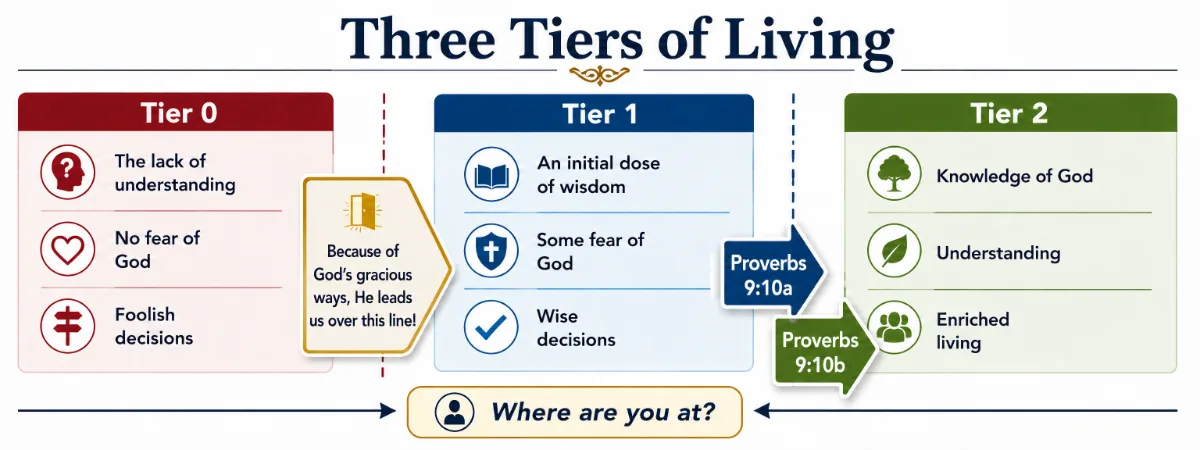
Verse 10 illustrates how understanding is layered, possibly into two or three levels. The first is inferred: foolishness. Foolishness, stemming from a lack of wisdom, knowledge of God, and awareness of what truly matters in life, leads to reckless, destructive decisions.
The second begins with the fear of God, which, as discussed above, brings wisdom. That wisdom, even in its smallness, helps us understand who God is and how His truth, His person, and the common judgment all influence our lives. Let us respond to Him and start improving our lives through His enabling grace. The third level appears in the second half of the verse, “ the knowledge of the Holy One is understanding.”
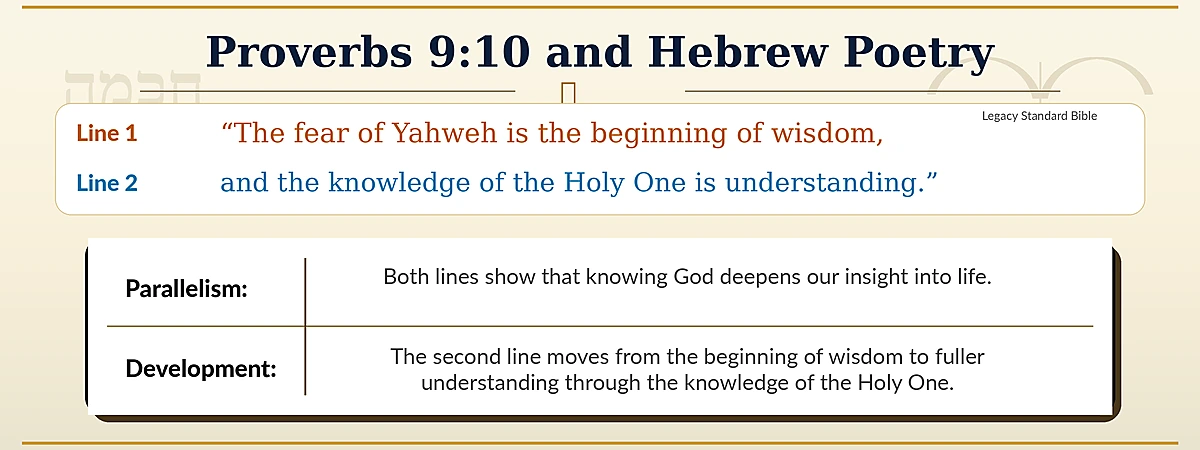
Currently, we are focusing on line 2, which defines our goal. Hebrew poetry often restates its main idea with a slightly expanded and differently phrased statement in the second part, as shown here. Often, this restatement provides deeper insights rather than just repeating the same idea. For example, in this case, we see how the fear of the Lord, the beginning of wisdom, starts to transform our lives. But that is only the start. Knowing the Holy One gives that extra boost in our lives. In other words, a deeper and more complete knowledge of God develops. Knowledge of God is partly reflected in fearing Him, but not entirely. People continue to grow in their understanding of God. (Make sure you distinguish between knowledge about God and knowledge of God, which involves experience and faith.)
Both lines illustrate how knowing God enhances insights into life. The second line depicts a shift from a limited to a more expansive understanding of God, matching a greater benefit.
Because people are made in God’s image, they can know Him. We do not see Him with physical eyes, but we can still know Him. The Holy Spirit plays a crucial role in enlightening our spirits through God’s own Spirit (1 Cor 2:10-12). In fact, we see many people but do not truly know them. We don’t know their thoughts. God, however, encourages us to become familiar with Him through our growing faith and His Word. It is by knowing God that we can truly understand life. This understanding creates a mental map that suddenly reveals what is important and what isn’t. While the fear of God often acts as a helpful barrier, knowing God positively points to a better way to live, speak, and relate. This knowledge of the Holy One guides and motivates us to make the best decisions. They become meaningful to us, and we act on them in our daily lives.
The fear of God initiates this process, but it cannot take us all the way to our destination. There are many lessons that the fear of God alone cannot teach us. For example, John illustrates how God’s love surpasses fear. “There is no fear in love; but perfect love casts out fear, because fear involves punishment, and the one who fears is not perfected in love” (1 John 4:18). Love serves as a better teacher because it encompasses all kinds of knowledge of God’s love that strengthen faith; the fear of God is limited.
Conclusion
Without the fear of God and the self-control we develop over our desires, will we not fall into the endless pit? The fear of God shows us the right way to live, but we truly need to know God to spread our wings and fly in His power and love. Without knowing the Holy One, the living God, we will die, but knowing Him through Jesus the Messiah gives life.
Study Questions
- What does Proverbs 9:10 mean when it says the fear of Yahweh is the beginning of wisdom?
- How is the fear of God different from merely claiming the Christian religion?
- Why does conviction of sin require more than information about sin?
- What is the difference between knowledge and understanding in this verse?
- How does knowing the Holy One help us judge what is important in life?
- In what ways can AI provide knowledge without producing wisdom?
- Which tier best describes your present life and why?
- What next step would help you grow in understanding?