
Written by Paul J Bucknell on July, 11, 2025
1 Corinthians 13:4-7 The Qualities of True Love
What does love really look like? In this deep and practical exploration of 1 Corinthians 13:4–7, Paul J. Bucknell walks through the biblical characteristics of true love. More than a wedding passage, this Scripture reveals how God’s love shapes our lives, attitudes, and relationships.
4 Love is patient, love is kind and is not jealous; love does not brag and is not arrogant, 5 does not act unbecomingly; it does not seek its own, is not provoked, does not take into account a wrong suffered, 6 does not rejoice in unrighteousness, but rejoices with the truth; 7 bears all things, believes all things, hopes all things, endures all things.
God’s Great Love - The Bible’s Theme
1 Corinthians 13 is a popular reading at weddings and is well-known for its focus on love, but we should not stop there. Love is the central theme of the Bible because God’s word flows from His being, which is rooted in love. “His lovingkindness is everlasting.” (1 Chr 16:34). “God is love” (1 John 4:8). Paul is not introducing a new topic in chapter 13 but applying God’s love to the lives of the troubled Corinthian believers, especially regarding the practice of spiritual gifts.
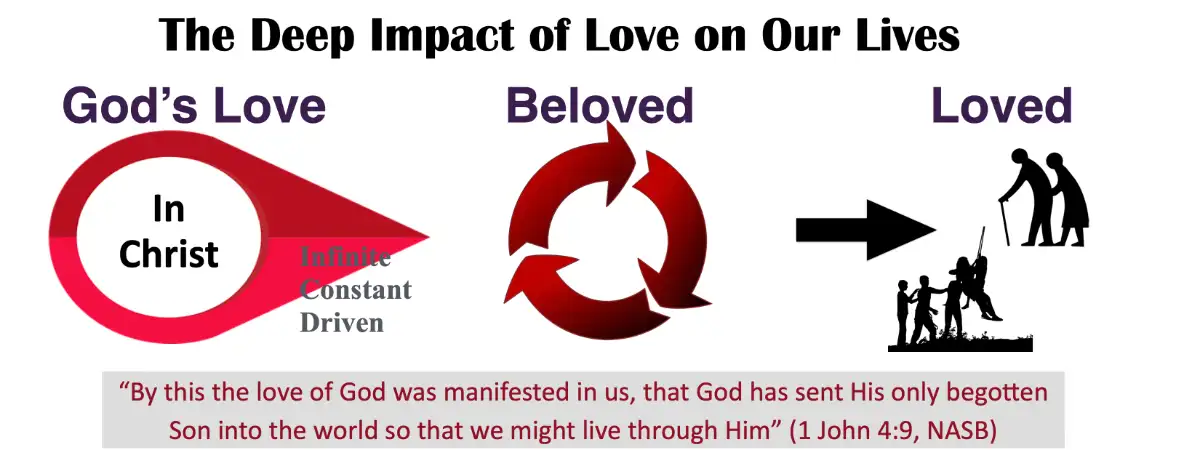
Because God is love, He brings that love into our lives, especially through Apostle Paul’s letter. John says, “By this the love of God was manifested in us, that God has sent His only begotten Son into the world so that we might live through Him” (1 John 4:9, NASB). Our faith in Christ grants us forgiveness and makes us children of God, filling us with His love. His Spirit now guides us, and as a result, we reflect our Father in heaven. We love as God loves. Our love is best understood as part of God’s great redemptive plan of love.
When saved by His Spirit, we become part of His family and develop an innate love for others. Love, as we will see, is not just an outward attempt to do good, but a sincere care for others that results in loving actions. (If you don’t feel that care for others, it’s a good idea to examine whether you know the Lord.)
Context of 1 Corinthians 13
In the first six chapters of 1 Corinthians, Paul addresses reports he received about their situation. The later chapters, 7-16, are naturally divided into six sections, each starting with the phrase “Now concerning.”
The fourth section’s “Now concerning” begins at 12:1, which includes chapter 13 and continues through the end of chapter 15. Although this section appears to focus on the use of spiritual gifts, Paul’s primary message is about restoring order to the very disorderly church. This helps us better understand smaller sections like 1 Corinthians 13, where he addresses discord within the church. The emphasis on love in chapter 13 shifts our attention to the essential attitude and approach we should have toward others in the church. Spiritual gifts describe the unique ways we can serve others, but 1 Corinthians 13 addresses the necessary attitudes we should have toward other believers.
This is why, in the first three verses of chapter 13, Paul emphasizes the futility of spiritual gifts and actions by repeatedly saying “but do not have love” (13:1, 2, 3); “It profits me nothing.” Spiritual gifts without love are worthless.
Love must shift from being just an idea to becoming a strong motivation to care for others, even when it requires sacrifice. How can we turn what is so familiar into something that transforms lives? That is God‘s purpose in loving others through us. He shows His glory in our lives by working through us. But the question remains: how can those familiar words help us?
These 41 Greek words form a masterpiece description of God’s love, brought to life in our lives. Usually, the most familiar passages are also the most fundamental. They play a deep, foundational role in our Christian lives. In this case, how can these words from God and the truth they relate serve that purpose? Paul illustrates how this works in practice.
As we proceed, let’s observe how each of the three sections in the outline below naturally has a different number of subtopics. We will follow this self-made outline.
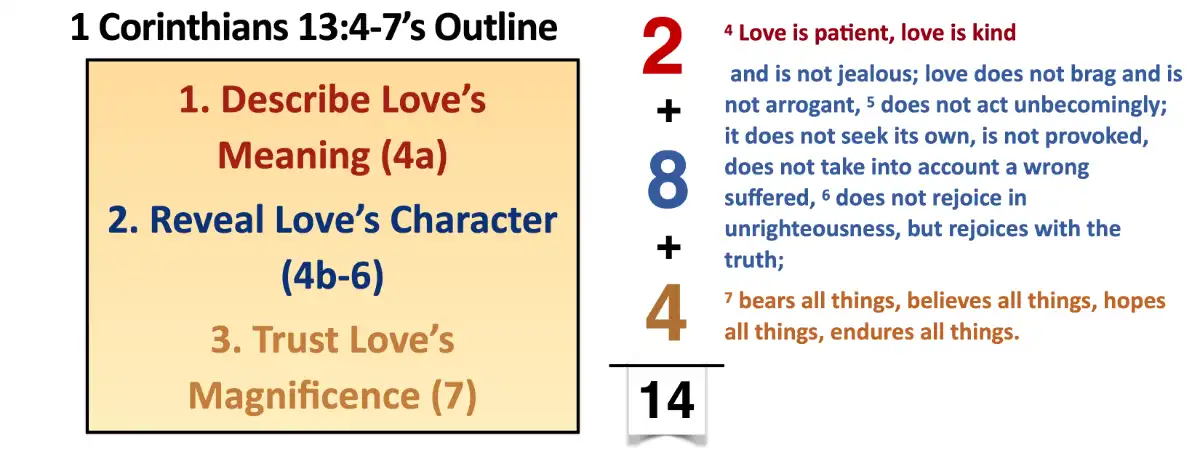
Verses 1-3 highlight the significance of genuine love, while verses 4-7 help us understand what love is not. Finally, verse 7 offers a broader perspective on love, giving a spiritual foundation for our faith.
1. Describe Love’s Meaning (4a)
“Love is patient, love is kind.” (1 Cor 13:4a)
Paul’s description of love begins with a simple, two-part understanding: “Love is patient, love is kind.” Essentially, he states that by practicing these two qualities—patience and kindness—we reflect the greatness of God’s love.
Terseness helps us to focus. If you're like me, you wonder, “Why isn’t the definition or list longer?” Or, more specifically, “Why does he use these two words instead of others?” I’m not sure we can fully answer these questions, but he surely points us in the right direction.
Love is patient.
Let’s start with patience. Few of us immediately think of patience when we think of love. However, this is quickly understood in our world. Parents learn this as they patiently care for sick, disobedient, or otherwise difficult children.
Even more interestingly, we find that God introduces Himself to Moses in this way.
“6 Then the Lord passed by in front of him and proclaimed, “The Lord, the Lord God, compassionate and gracious, slow to anger, and abounding in lovingkindness and truth; 7 who keeps lovingkindness for thousands, who forgives iniquity, transgression and sin; yet He will by no means leave the guilty unpunished, visiting the iniquity of fathers on the children and on the grandchildren to the third and fourth generations.”” (Ex 34:6-7)
Notice how God describes Himself as “compassionate and gracious, slow to anger…” The phrase “slow to anger” is used 12 times in the Old Testament to describe God, while in the New Testament, it appears once, spoken by James—a trait that believers are encouraged to demonstrate. “This you know, my beloved brethren. But everyone must be quick to hear, slow to speak and slow to anger” (Jam 1:19).
Being slow to anger is a good way to describe stepping back from the urge to react immediately to someone’s words or actions. It helps us handle life’s disappointments by prayerfully considering what God might want. It provides a buffer zone to gain outside wisdom. God similarly adjusts His responses by delaying His anger. Without God’s patience with us and the world, none of us would live or be saved. God is love; this is His way. His children, gifted with the fruit of the Spirit of patience (Gal 5:23), also practice this patience (and kindness).
Here is a functional definition for patience:
I limit my initial reactions to how people let me down, understanding their flawed nature, unique circumstances, needs, abilities, and priorities, while seeking to do what is best for them.
Our expectations often let us down, whether it’s a driver, our children, spouse, colleague, fellow-deacon, or neighbor. Instead of reacting with anger, we choose to be slow to anger and, like God, compassionate and patient. This is love.
Let me illustrate this with Proverbs 15:28: “The heart of the righteous ponders how to answer, but the mouth of the wicked pours out evil things.” Do you see how the righteous take time to consider their response? They don’t react immediately. Love encourages us to think about the best way to respond. Our words, actions, and tempers, like God our Father’s, should reflect hope for change in others, allowing us to reshape our initial reactions.
Patience allows us the necessary time to respond thoughtfully to others and recommit to them by genuinely caring for their souls. We pause to consider how we can help them in their struggles, even though they face bad consequences because of their foolish choices.
Love is kind.
Love is kind. Man’s love, however, is temporary, fleeting, and self-centered. In other words, kind behavior is not always driven by love, as shown in the first three verses. One might pretend love, but what does he say and do? Genuine love reveals itself through kind and caring acts and words.
Love demonstrates concern for others that surpasses one’s own well-being or comfort. It willingly goes out of its way to help others. One of the strongest arguments against all kinds of sexual immorality is how it promotes selfishness by using others for personal gain. This is the exact opposite of love and the values we claim to uphold.
Here’s my practical definition of kindness: “I believe in treating people better than they deserve, even going out of my way to help them.” This mindset, and indeed the Spirit of God working within us, enables us to become agents of God, expressing His love through our lives. We are on God’s love team, caring for others the way He cares for them. He loves people through us. Love is the defining mark of the Christian faith.
Summary
Patience allows us time to consider how we can help others in their struggles, even when they are battling sin. Kindness demonstrates God’s care for others, even if they don’t deserve it. The desire to serve others goes beyond our comfort zone, reflecting Christ’s life.
2. Reveal Love’s Character (4b-6)
“And is not jealous; love does not brag and is not arrogant, 5 does not act unbecomingly; it does not seek its own, is not provoked, does not take into account a wrong suffered, 6 does not rejoice in unrighteousness, but rejoices with the truth.” (1 Cor 13:4b-6)
A Humble Heart
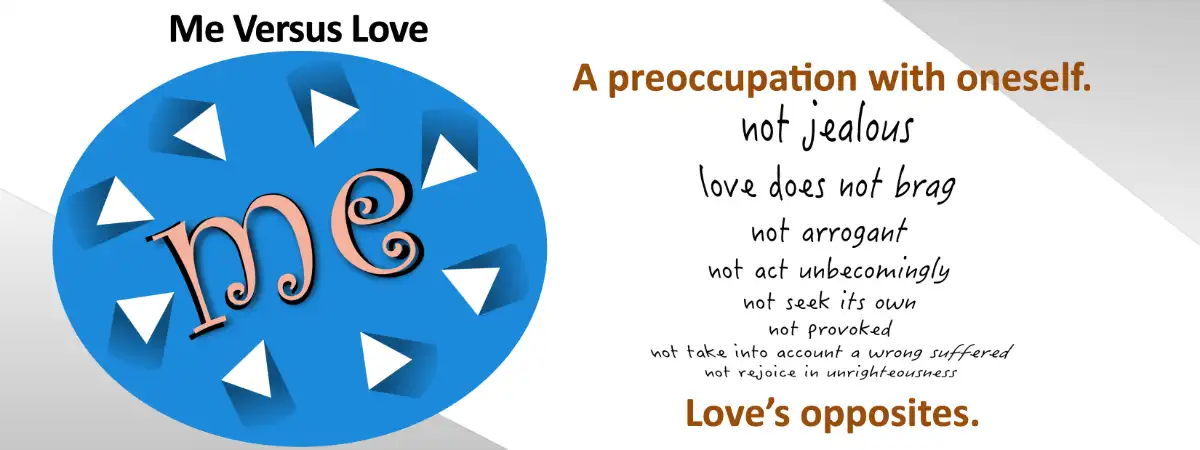
As we review these eight responses in this second section, let’s quickly acknowledge our failures, apologize to God and others as needed, and with God’s grace, realign our paths. Paul repeatedly emphasizes the word ‘not’ to clarify what love isn’t.
God wants to express His love through us, but our natural self-focus blocks this. “In everything, then, do to others as you would have them do to you. For this is the essence of the Law and the Prophets” (Matthew 7:12 BSB).
I often hear Christians say, “We are not perfect.” Of course, we're not. But why do most say this? They excuse their wrongdoings or try to minimize their accountability to live righteously. Paul sees through these religious disguises that might otherwise hide our responsibilities. Let me say that we are all sinners and have fallen short of God’s glory, which requires us to believe in Christ's righteousness so we can have peace with God through forgiveness in Christ’s sacrifice. However, the real reason we use these negative descriptions is to reveal how often we fake love, whether toward others or ourselves. Paul exposes these weaknesses.
You might catch yourself saying, “I love you,” but then do or say things the next day that don’t reflect love. We deceive ourselves and try to deceive others, saying one thing but acting differently. To gain a clearer understanding, let’s examine these eight items.
Each of these ‘nots’ is the opposite of love. God has called all His people to walk in His light and love, so consider this a challenge to live out our Christian lives. We will reflect on our lives to identify each selfish expression. Here are three steps to help process each instruction.
1. Recognize where and how your words, attitudes, or actions have hindered love by focusing on yourself.
2. Repent and pray a confessional prayer specifically for this: “Lord, I have sinned and not displayed your love. Please forgive me.”
3. Ask God for grace, love, and wisdom for how to respond in ways that differ from your natural reactions.
To face seemingly impossible changes, remember that love is the opposite of unloving actions or attitudes. While some areas may seem more strict, each offers an opportunity to show the love of God. God’s love shines brightest when His people endure difficult tests. I’ll suggest some ‘opposite’ loving actions we can take, but you will come up with even more!
Eight Opposites of Love
- Jealousy: I’m jealous because I want the attention others get, so I will start showing appreciation for what I envy. I will openly express my admiration for the skills, wealth, friends, and other blessings God has given them. I’ll be truly content with my situation.
- Love doesn’t brag. I often talk about myself, so I will ask at least three questions about how others are doing.
- “Love is not arrogant.” I’m arrogant—thinking myself smarter, brighter, wealthier, gifted, spiritual—so I will start identifying and thanking God for the great work God is doing in others. Even though flawed, God made them unique.
- Love doesn’t act unbecomingly, but I sometimes say things or write posts that are not pure, loving, and holy. I’m trying to get attention cheaply. I will stop this and start seeking wisdom on how I can build up rather than tear people or institutions down.
- Love doesn’t seek its own. I’ve been too focused on myself and haven’t been able to keep my eyes on Jesus or notice the needs of others. I have the gift of helps and will start looking for ways to use my gift to assist others.
- Love isn’t provoked. I must have only a tiny love. I get easily upset by what people say, whether it’s written or spoken. “Lord, help me to know You better; I feel so insecure. Help me, Lord, to see their lives through your eyes or theirs. It’s time for me to be more patient!”
- Love doesn’t cling to wrongs. I’ve been hurt and harbored bitterness for years, but you have told me to forgive. I will forgive them. You’re the Judge; I trust you to handle it. Meanwhile, I need to take practical steps to show my care for them.
- Love does not rejoice in unrighteousness. I realize my wrong responses to paybacks. Please forgive me for wishing them evil for their wrongdoing. I have been focusing on them getting what they deserve instead of seeking your mercy on their behalf. You are the Judge and Savior. Help me to show grace and to shine, even while there is time.
Maintain high standards of love. It will benefit you and your relationships! You’ll begin to notice rewards from this attitude toward difficult people, even if the situation hasn’t changed at all. You are on God’s mission to shine His love to others.
3. Trust Love’s Magnificence (7)
(Love) bears all things, believes all things, hopes all things, endures all things.
This final section, verse 7, presents four powerful statements that emphasize the greatness of love. Love always works. Because of this, we can open our lives wide to the love of God. We might not change a person, but we reflect God’s love. Instead of getting caught up in our flesh, we get to care for others, many of whom have no one to love them.
Although the end of verse 6 clearly states that love “rejoices with the truth,” this clause actually belongs to verse 5 and the list of 8 items, not the four items in verse 6. The four items share the same word order, each beginning with ‘all’ (Greek: panta) and the second word being the verb. The poetic structure is even evident in English.
Love reflects God’s purpose throughout our lives. It becomes a powerful force when we align ourselves with God’s plans. God wants us to shine in this world and show love in a way that others see Him alive. This means that, like Jesus, we will face tough times, but there is a meaningful purpose behind the crises we face—whether in our marriage, with our children, neighbors, or anyone else. Maybe a coworker at church goes through a rough patch; you might even lose money or get a bad deal, but in the end, you come out ahead.
Bears all things - “I can take it.”
Love is willing to endure everything — to sustain, carry, shoulder, uphold, absorb, and take on. Think of a ship that accepts whatever others load upon it. Why should I tolerate my spouse’s trashy words or antics? Why allow others to dump on me? While it’s true that we can only bear so much, I see this more as a willingness to accept others’ destructive behaviors because I can somehow better demonstrate God’s grace and mercy to them. (This doesn’t make their actions right.)
Believes all things - “God will work it all out.”
Please don’t confuse “believe all things” with Prosperity Theology, which claims that one can make things happen simply by wishing them into being. The Scriptures advise us to pray according to God’s will, and so, we seek God’s will, not our own. This phrase, 'to believe all things,' relates to relationships and is similar to the idea of hoping for all things. Let me put it this way: We don’t live by sight but by faith. We believe in God’s promises rather than what usually happens. If God wills, He can use my small act of kindness to bring about significant changes in a person’s life.
Hopes all things - “I’m praying for a miracle.”
Have you ever felt tempted to give up hope for someone? Don’t. If God has placed someone in your life, hope the best for them. If you lose your hope, you won’t pray in faith. Your hope doesn’t change their destiny, but it makes you a vessel through which God might work to bring hope, encouragement, and guidance to someone in need. Keep your relationship open. Start by praying, “Lord, this looks impossible—maybe it is, but it’s just the kind of situation you love to step into and show your magnificent grace. Will you please….?” See how hope opens doors through faithful, ongoing prayer?
Endures all things - “I’m in it for the long haul.”
Love endures hardship. There is no limit to what I will tolerate. Satan would want us to shut people out of our lives. “Why put up with those people?” The difficulty, however, enables God’s miraculous love to reach and wonderfully transform other people’s lives, bringing forth the fragrant presence of God’s love in Christ.
Love is a profound attribute of God, as demonstrated through Jesus Christ; it is poured out into every believer. That’s why we understand love so well: because God is love, and God entered our lives through Christ. We are His temple. Since love originates from God and fills us, we can always trust that there is enough love for the challenges we face. This faith fosters unity in love and in what God is doing in our lives. These principles are essential for living a loving life.
Summary
This powerful presentation of God’s love in 1 Corinthians 13:4-7 is divided into three sections. It starts with two simple, affirmative, one-word definitions: we must always love. The most extensive section features eight negative words or phrases, emphasizing what love is not, filling in the gaps. Spot those blind spots. The final section significantly boosts our confidence in love’s great work. By showing the vision of love, it frees us from many trivial concerns and reveals the full power of love. Live within God’s grand plan of love. May God’s excellent plan of love flow beautifully in and through us. This is the most wonderful way that Paul refers to in 1 Corinthians 12:31, “And I show you a still more excellent way.”
1 Corinthians 13:4-7 Study Questions
- What makes verses 4-7 naturally divided into three sections?
- What do the numbers associated with each section mean?
- Why is patience necessary for loving people?
- What does kindness mean? Provide an example.
- How do we know that God is patient and kind?
- Pick out two items from the second section that are most relevant to your life.
- Identify a problem in your life and suggest one or two ways to love in those circumstances.
- What is the grand redeeming scheme of love? Identify all three parts (from the chart).
- What does “hopes all things” mean? How does it practically guide your life?
- The phrase “Love bears all things” refers to the terrible things people add to your life through their words or actions. How do you handle these situations?
- If someone told you that it’s impossible to love a particular person, based on these truths from these verses, how would you respond?
Other Related Articles by Paul J. Bucknell
Patient Fathering: Learning to Display God's Endless Love | Biblical ...
God wanted me to love that crying child of mine, or recently my grandson, in such a way that they experienced this patient and kind love that ...
Love Your Wife! Married 42 years! (Eph 5:25) | Biblical Foundations ...
Paul told husbands to love their wives. There is no doubt about this obligation—no matter how our wives might seem undeserving of it ...
God's Unconditional Love (Part 2) Questions on Chastisement ...
The argument comes from Ephesians 5:25-33 where Christ's magnificent love for the church presents itself as the model for a husband's love to his wife.
The Deep Spring of God's Ongoing Love (Psalm 118) | Biblical ...
Psalm 118 is one of those Old Testament springs that feed into the broader river of God's love, as seen in the New Testament. God re-echoes ...
2 Peter 1:7 Practice Brotherly Love | Biblical Foundations for Freedom
Brotherly love builds upon godliness, the sixth quality. Godliness expresses God's standards and upright living, but brotherly love is shown by giving extra ...
God's Unconditional Love | Biblical Foundations for Freedom
“Unconditional love” points to the secure and eternal state of God's love for those forever captured by His love.
Impossible Love : In Mark 8:1-9 Jesus awes us with His words, "I feel compassion." I knew this was going to be a powerful lesson.
Psalm 57:10-11 God's Indescribable Love | Biblical Foundations for ...
Three words highlight the indescribable love of God described by David: Immeasurable, Priceless, and Unimaginable.
Ephesians 5:24-32 Ultimate Love, Extreme Missions | Biblical ...
But this love is real, if not in your or your parents' marriage, but certainly in the Lord's love for you, God's people! God wants such intimacy ...