Our Facebook

Deuteronomy 16: A Grand Perspective of Time | Biblical Feasts
The three major feast seasons in Deuteronomy 16 help believers recover a grand perspective on life. Modern people often view time and purpose through the narrow lens of self-interest, but God shaped Israel’s calendar around His redemptive plan. The feasts taught His people to remember what He had done, to live in His presence, and to anticipate what He would yet do.
Passover and Unleavened Bread remind us that salvation begins with the blood of the Lamb and requires a cleansed life. The Feast of Weeks points to Pentecost, the Holy Spirit’s indwelling, and the purpose of spreading the gospel. The Feast of Booths directs our hope toward the final harvest, judgment, and the everlasting home God provides. Deuteronomy 16 therefore offers a framework for Christian living: salvation in the past, Spirit-empowered purpose in the present, and eternal hope in the future.
Main Points
- God gives perspective through worship: The feasts trained God’s people to see time, life, and decisions through the Lord’s purposes rather than through self-centered desires.
- Passover points to salvation through Christ: The Passover lamb points to Jesus Christ, whose blood redeems His people and reconciles them to God.
- Unleavened Bread calls believers to holiness: The removal of leaven illustrates the believer’s calling to remove sin and live in God’s presence with purity.
- Firstfruits points to resurrection life: The timing of Firstfruits helps believers connect the feast pattern to Christ’s resurrection and new life.
- The Feast of Weeks points to Pentecost: The Holy Spirit was poured out fifty days after Christ’s resurrection, empowering God’s people for gospel witness.
- The Feast of Booths points to final hope: Tabernacles reminds believers that this earthly journey is temporary and that God’s people await their eternal home.
- God’s calendar confronts human-centered living: Deuteronomy 16 calls believers to order life around God’s salvation schedule rather than personal preference or cultural pressure.
Study Questions
1. Why does Deuteronomy 16 place such strong emphasis on the place the Lord chooses, and how does this shape the meaning of worship?
2. How do Passover, Unleavened Bread, and Firstfruits help us understand salvation, cleansing from sin, and resurrection life in Christ?
3. What does the removal of leaven teach believers about holiness and the danger of holding onto sin?
4. How does the Feast of Weeks point forward to Pentecost and the Holy Spirit’s work in the New Covenant?
5. Why is gospel proclamation an essential part of the Christian’s present purpose rather than an optional activity?
6. How do Trumpets, Atonement, and Booths help believers think about repentance, judgment, final harvest, and eternal hope?
7. In what ways does God’s feast calendar challenge a self-centered view of time, purpose, and decision-making?
Corresponding Article
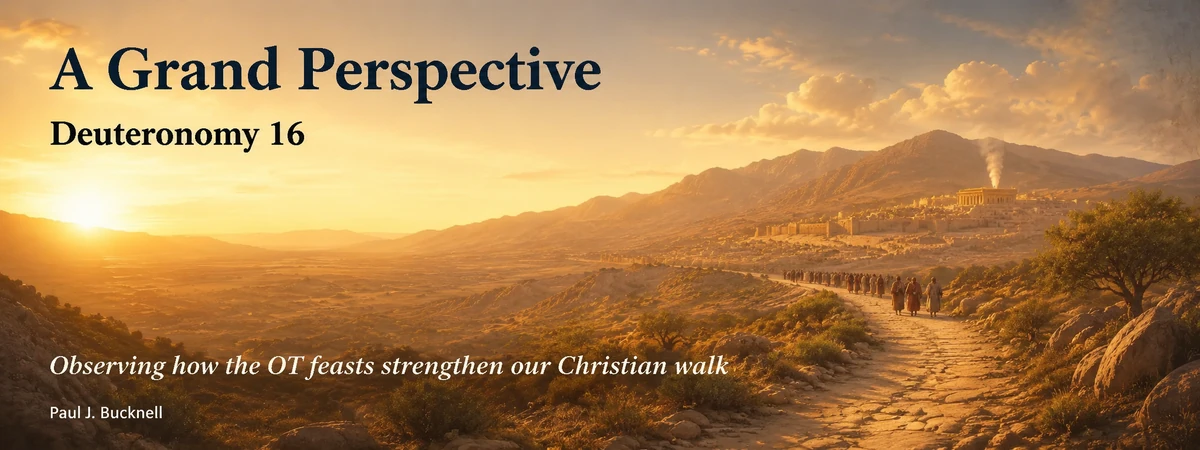
Deuteronomy 16 A Grand Perspective of Time: Observing how the OT feasts strengthen our Christian walk
The three major feast seasons in Deuteronomy 16 help believers recover a grand perspective on life. Modern people often view time and purpose through the narrow lens of self-interest, but God shaped Israel’s calendar around His redemptive plan. The feasts taught His people to remember what He had done, to live in His presence, and to anticipate what He would yet do.






© 2022 Biblical Foundations for Freedom. All rights reserved. CodeoStudio